

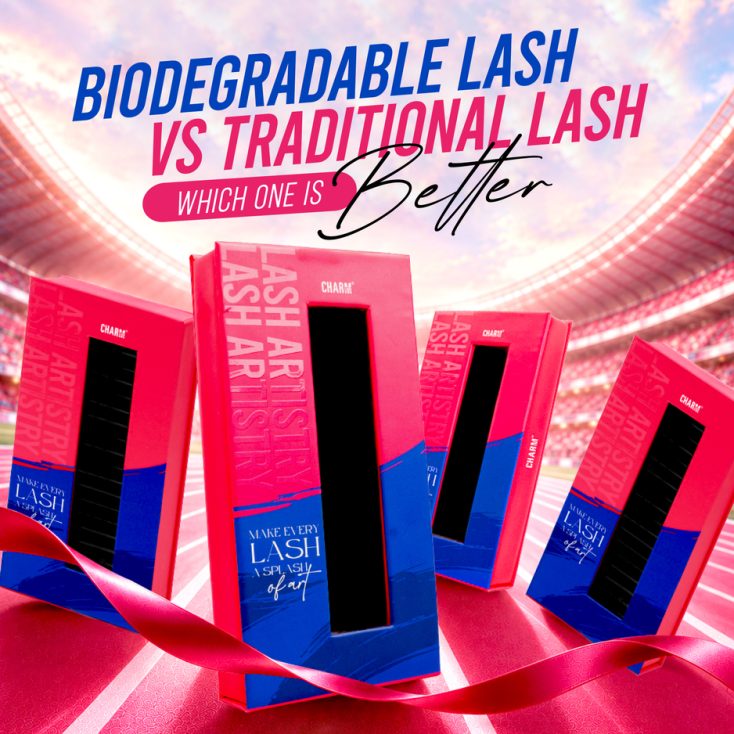
Sustainability is becoming an increasingly important topic in the beauty industry. As consumers pay more attention to plastic waste and environmentally friendly materials, lash manufacturers are exploring alternatives to conventional synthetic lash extensions and synthetic eyelashes. Among these alternatives, Biodegradable Lash Extensions and PLA lashes are attracting attention for their potential to reduce long-term environmental waste. But what are lash extensions made of, and does biodegradable automatically mean better?
When evaluating Biodegradable Lash Extensions, environmental benefits are only one part of the equation. Lash artists also need fibers that maintain their curl, feel lightweight, resist moisture, and remain durable throughout weeks of wear. So, how do Biodegradable Lash Extensions compare with PBT lashes and PBT eyelash extensions? Can alternative materials deliver the performance that professional lash artists expect?
Let’s explore their materials, curl retention, flexibility, durability, pricing, and availability to understand which option makes more sense for professional lash applications.
I. Understanding Traditional Lash and Biodegradable Lash
1. What Are Traditional Lash Extensions?
Traditional lash extensions are synthetic fibers designed to replicate the appearance and texture of natural eyelashes, forming the basis of many professional synthetic lash extensions. Among the most commonly used materials in professional lash manufacturing is PBT (Polybutylene Terephthalate), a thermoplastic polyester known for its flexibility, durability, and shape stability.
Why has PBT become such a popular choice among lash manufacturers? Its physical properties make it suitable for creating delicate, lightweight fibers while maintaining the structure needed for professional eyelash extensions. Some of its key characteristics include:
- Lightweight and flexible: PBT fibers can be manufactured in different diameters to accommodate various lash styles, from Classic to Mega Volume.
- Excellent curl retention: Its thermoplastic properties allow manufacturers to heat-set different curls and maintain their shapes under normal usage conditions.
- Moisture and heat resistance: PBT has low moisture absorption and excellent heat resistance, helping fibers maintain their physical properties, curl shape, and structural stability when exposed to humidity, water, and normal temperature changes.
- Durability and shape stability: Its resistance to deformation makes it suitable for extensions designed for several weeks of wear.
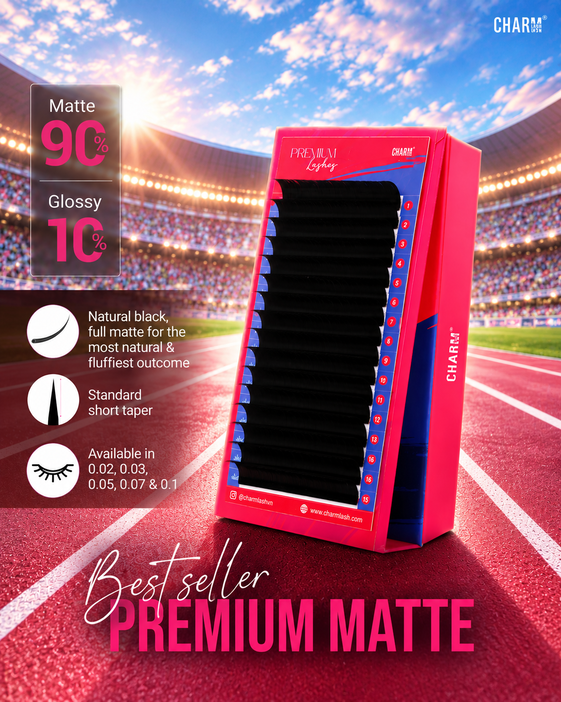
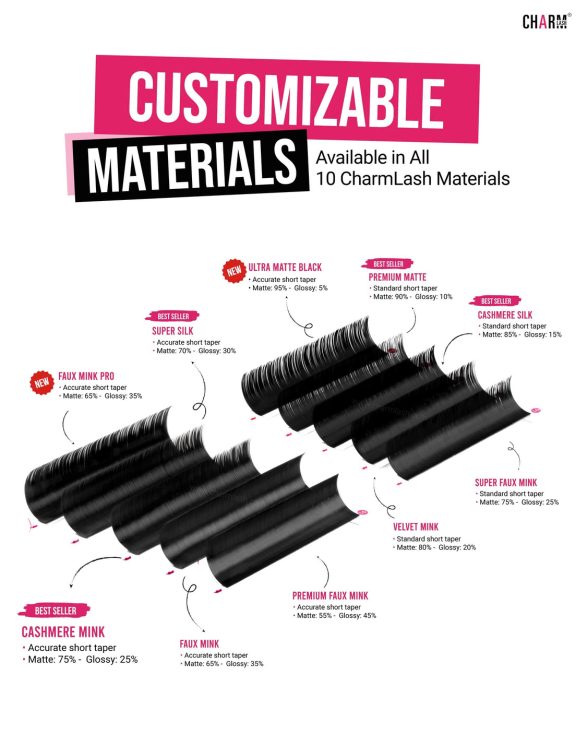
Traditional lash materials are also available in various finishes, such as Cashmere Silk, Super Silk, and Premium Matte. These names often describe the appearance, texture, and finishing characteristics of the fibers rather than entirely different base materials.
2. What Are Biodegradable Lash Extensions?
Biodegradable Lash Extensions refer to eyelash fibers made from materials designed to break down through biological processes under suitable environmental conditions. Unlike conventional synthetic polymers, certain biodegradable materials can be decomposed by microorganisms over time. Several material categories are being explored for sustainable beauty applications, including plant fiber lashes (also called plant fibre lashes):
- PLA (Polylactic Acid): A bio-based polymer commonly produced from renewable resources such as corn starch or sugarcane.
- Cellulose-based fibers: Materials derived from plant cellulose, which can offer biodegradable alternatives depending on their processing and composition.
- Other biodegradable polymers: Different polymer formulations are being developed to balance environmental properties with the physical performance required for consumer products.
One important distinction is that bio-based does not automatically mean biodegradable. A material can come from renewable plant sources without necessarily breaking down easily in natural environments. Similarly, biodegradation depends on factors such as temperature, moisture, microorganisms, and disposal conditions. Some materials require industrial composting facilities rather than simply decomposing in soil or water. For Biodegradable Lash Extensions and other biodegradable eyelashes, understanding the actual material composition and its degradation conditions is essential before evaluating their environmental benefits.
3. Why Are Biodegradable Lash Extensions Becoming an Alternative?
Interest in Biodegradable Lash Extensions reflects a wider shift toward sustainable beauty, including demand for eco lashes and eco friendly lash extensions. Traditional synthetic fibers contribute to the growing conversation around plastic waste and persistent microplastic pollution. As brands explore ways to reduce their environmental footprint, alternative materials naturally attract attention. Labels such as cruelty free lash extensions, vegan lash extensions, and eco-friendly eyelash extensions may also appeal to conscious buyers, although these claims describe different product attributes and do not by themselves prove biodegradability.
However, replacing an established material is not as simple as finding something that can biodegrade. Biodegradable Lash Extensions must meet two important requirements: environmental responsibility and product performance. This distinction becomes particularly important when comparing DIY lashes with professional extensions. DIY lashes are typically designed for short-term use and are removed after one or two uses. Professional extensions, on the other hand, are designed to remain on natural lashes for 4–8 weeks.
Therefore, Biodegradable Lash Extensions intended for professional applications face significantly higher durability and performance requirements.
II. Material Comparison: PBT vs Biodegradable Fibers
1. Traditional Lash: The Proven Performance of PBT Fibers
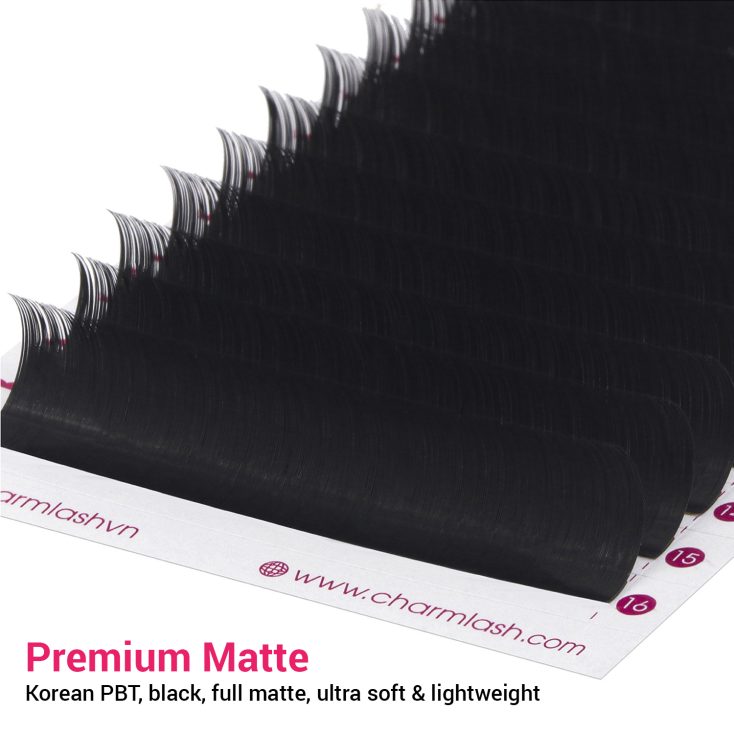
PBT is a thermoplastic polyester, meaning it can be softened and shaped through controlled heating. This property is particularly useful in lash manufacturing because it allows manufacturers to create consistent curls and maintain the desired fiber structure. PBT also offers good elasticity and shape recovery. When manufactured correctly, the fibers can maintain their intended curves without easily losing their form under normal wearing conditions.
Another advantage is its relatively low moisture absorption and excellent heat resistance. PBT generally maintains stable physical properties in humid environments and under normal temperature changes. These characteristics allow manufacturers to produce a wide variety of lash styles, including different lengths, thicknesses, and curls.
For professional lash artists, this means greater flexibility when creating customized lash maps and styling different eye shapes.
2. Biodegradable Lash: The Challenges of Alternative Materials
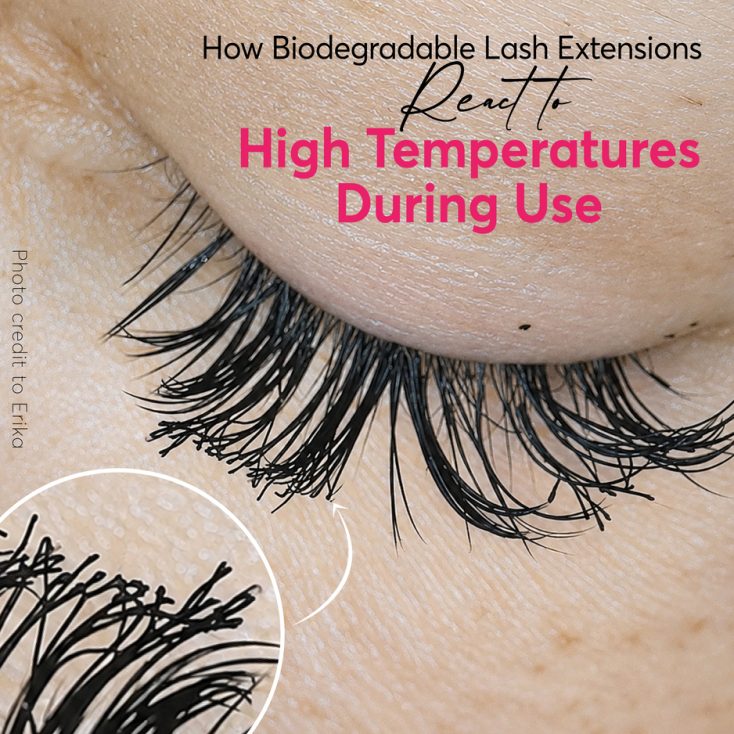
Biodegradable Lash Extensions rely on alternative polymers with physical properties that differ from conventional PBT. For example, PLA has different thermal and mechanical properties from PBT. Its heat resistance, flexibility, and moisture-related behavior can create limitations when used in applications requiring long-term shape stability.
Cellulose-based materials also have their own challenges. Some forms of cellulose absorb moisture, potentially affecting their dimensions and mechanical properties. These characteristics make it more challenging to achieve the flexibility, durability, and shape retention required for professional lash extensions.
Compared with PBT, Biodegradable Lash Extensions face greater challenges in maintaining consistent physical properties throughout extended wear. Manufacturers must also overcome difficulties in producing fine fibers without compromising their structural strength.
3. Which Material Is More Suitable for Professional Lash Extensions?
Here is a quick comparison of the two material categories:
New wpDataTable
| Criteria | Traditional PBT Lash | Biodegradable Fibers |
| Material | Synthetic polyester | PLA, cellulose and other polymers |
| Curl Retention | Well-established | Poor curl retention |
| Flexibility | Consistent and adjustable | Limited flexibility |
| Moisture and Heat Resistance | Relatively high | Low resistance |
| Shape Stability | Proven performance | Poor shape stability |
| Durability | Suitable for extended wear | Not durable enough for long-term wear |
| Manufacturing | Established processes | Limited manufacturing capabilities |
| Availability | Widely available | Limited options |
| Environmental Profile | Persistent synthetic polymer | Potentially biodegradable |
Overall, PBT has a clear advantage in established manufacturing performance and professional applications. This is why many lash brands continue to work with an experienced lash extension manufacturer for consistent PBT production. Biodegradable Lash Extensions offer environmental potential, but their material limitations make them less suitable for the demanding requirements of professional lash extensions.
III. Curl Retention: Which Lash Material Holds Its Curl Better?
1. Traditional Lash: Excellent Curl Retention and Shape Stability
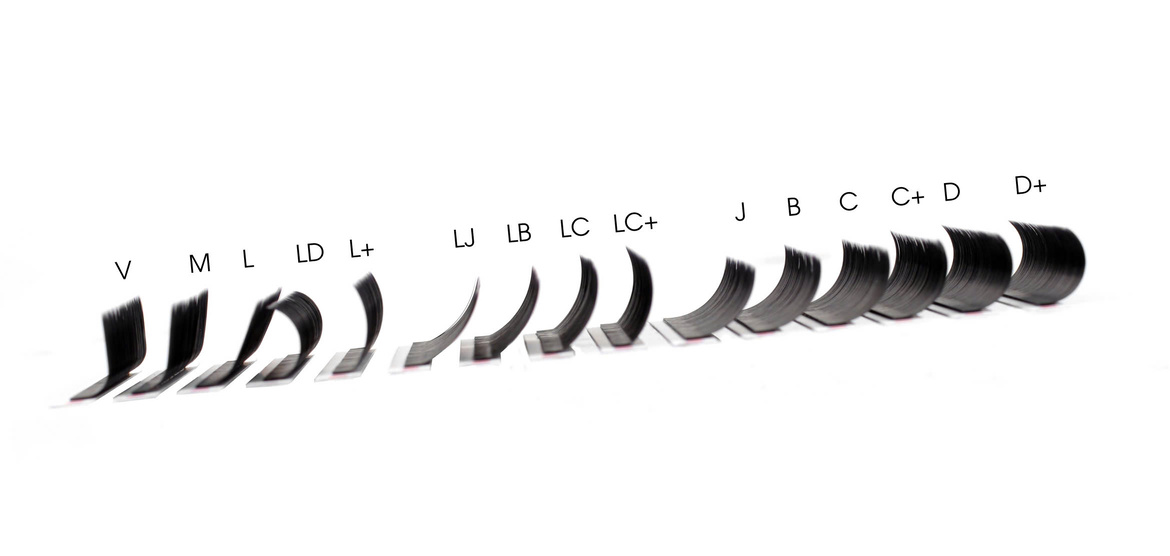
One of PBT’s biggest advantages is its ability to maintain heat-set curls. During manufacturing, controlled heat is used to shape the fibers into different curl patterns. Once properly processed, these curls can remain stable throughout normal wear. Whether a lash artist prefers B, C, CC, D, DD, or more specialized curls like LJ, LB, LC, and LC+, PBT provides a reliable material foundation for producing consistent shapes.
Imagine creating a beautifully mapped D-curl set, only to find that some fibers gradually lose their lift. The result may look uneven, affecting the overall styling and customer experience. With properly manufactured PBT fibers, lash artists can work with greater confidence in the consistency of their materials.
2. Biodegradable Lash: Potential Challenges in Maintaining Curl
The curl performance of Biodegradable Lash Extensions presents a major challenge for professional applications. Some biodegradable polymers have lower heat resistance or different mechanical properties compared with PBT. Their sensitivity to moisture and environmental conditions can also affect their ability to maintain a stable curl.
This means that Biodegradable Lash Extensions may struggle to preserve their original shape throughout several weeks of wear, particularly when exposed to repeated changes in humidity and temperature. For professional lash artists, this creates a practical concern: inconsistent curls can compromise lash mapping, styling precision, and the final appearance of an extension set.
IV. Weight, Flexibility and Durability: Which Lash Feels Lighter, More Comfortable and Lasts Longer?
1. Traditional Lash: Lightweight and Flexible Fibers
PBT can be manufactured into extremely fine fibers with different diameters, including 0.03 mm, 0.05 mm, 0.07 mm, and 0.10 mm. This variety allows lash artists to select suitable thicknesses for different techniques:
- Classic lashes: Individual extensions for a defined, natural-looking result.
- Volume lashes: Multiple fine extensions combined into fans for fuller coverage.
- Mega Volume lashes: Ultra-fine fibers used to create dense, dramatic volume.
The flexibility of PBT also allows the fibers to bend naturally rather than feeling overly rigid. Another important benefit is its durability. PBT maintains relatively stable physical properties under normal wearing conditions, helping extensions preserve their intended shape.
When combined with correct application, suitable adhesive, and proper aftercare, these properties support the long-term performance expected from professional extensions.
2. Biodegradable Lash: Differences in Fiber Density and Flexibility
Biodegradable Lash Extensions do not automatically offer lighter or more flexible fibers than traditional synthetic lashes. Weight depends on several factors, including material density, fiber diameter, and length. Some alternative materials have limited flexibility and may require different structural designs to achieve the strength needed for professional use.
This creates challenges when producing ultra-fine fibers for Volume and Mega Volume applications. Fiber flexibility is essential for creating symmetrical fans and achieving a consistent finish. Moisture resistance is another concern. Certain biodegradable materials have lower resistance to water and humidity, making it harder to maintain their physical properties throughout extended wear.
For professional applications, Biodegradable Lash Extensions must withstand everyday exposure to water, oils, cleansing products, and environmental changes without losing their structure. The key issue is their ability to remain lightweight, flexible, and durable throughout the full 4–8-week professional wear cycle. PBT currently offers a more established solution for meeting these requirements.
V. Pricing and Availability: Traditional Lash vs Biodegradable Lash
1. Traditional Lash: Competitive Pricing and Established Supply Chains
PBT has been widely used in the lash industry for years, creating an established manufacturing and supply ecosystem. Its advantages include:
- Established production processes and manufacturing expertise.
- A wide range of suppliers and product specifications.
- Multiple options for curls, lengths, thicknesses, and finishes.
- Competitive pricing across different product categories.
- More predictable bulk production and supply planning.
For lash businesses, these advantages make sourcing easier and help maintain consistent product offerings.
2. Biodegradable Lash: Higher Production Costs and Limited Availability
Producing Biodegradable Lash Extensions requires specialized material development and manufacturing processes to achieve the physical properties needed for professional use. Developing fibers that combine biodegradability with flexibility, curl retention, and durability involves additional technical challenges.
These requirements can increase manufacturing complexity and production costs, particularly when manufacturers need to develop new processing techniques or improve fiber consistency. Availability is another disadvantage. Compared with established PBT products, Biodegradable Lash Extensions have more limited supplier options and fewer choices in curl patterns, thicknesses, and lengths.
For businesses purchasing in bulk, limited availability and inconsistent supply can make inventory planning more difficult.
VI. Why Biodegradable Lash Extensions May Not Be the Best Choice for Professional Lash Extensions
So, if biodegradable materials offer environmental benefits, why not replace traditional PBT altogether? The main concern in the biodegradable lash vs traditional lash discussion is the difference between short-term DIY lashes and professional lash extensions. DIY lash products are often designed for temporary use. Consumers typically wear them for a short period and remove them after one or two uses. Their material does not need to maintain the same level of durability as a professional extension.
Professional lash extensions are different. They are applied individually or in fans to natural eyelashes and are intended to remain in place for approximately 4–8 weeks, depending on the application, natural lash cycle, adhesive, and aftercare.This longer wear period requires significantly better material stability.
- Compromised Curl Retention and Shape Stability
Professional lash extensions must maintain their intended curl throughout the wear cycle. If a fiber loses its shape too quickly, the original lash design may become inconsistent. Biodegradable Lash Extensions made from materials with limited heat resistance and shape stability may struggle to maintain consistent curls over several weeks.
For lash artists, this creates a practical problem. Consistent curl is essential for maintaining beautiful, predictable results and ensuring that the original lash mapping remains visually balanced.
- Potential Moisture Sensitivity and Durability Concerns
During everyday wear, lash extensions encounter humidity, water, cleansing products, and environmental changes. Materials must maintain their structural properties throughout these conditions. Certain biodegradable fibers have lower moisture resistance, making them less suitable for applications requiring prolonged exposure to everyday environmental conditions.
If Biodegradable Lash Extensions lose their physical stability before the natural lash cycle is complete, this could affect their appearance and reliability.
- Inconsistent Performance Across Different Lash Styles
Professional lash artists need more than one type of fiber. They require a complete range of curls, lengths, and thicknesses to create different styles and accommodate individual clients. Producing ultra-fine, flexible fibers while maintaining consistent curl and mechanical strength can be technically challenging.
Volume and Mega Volume techniques make these requirements even more demanding because fiber quality affects fan formation, symmetry, and overall appearance. For Biodegradable Lash Extensions to become a practical professional alternative, they would need to deliver consistent performance across different specifications and production batches.
- Professional Performance Should Come Before Biodegradability
Environmental responsibility matters, but professional performance cannot be overlooked. Remember, lash extensions are applied close to the eyes and remain on natural lashes for several weeks. Their materials must meet appropriate safety, quality, and performance requirements.
Choosing Biodegradable Lash Extensions based on their environmental claims alone does not guarantee that they can deliver the durability, curl retention, and stability needed for professional applications.
Manufacturers must prioritize material performance, including flexibility, moisture resistance, durability, and consistency. Unless biodegradable alternatives can demonstrate comparable performance throughout the intended wear cycle, replacing PBT may create unnecessary compromises for lash artists and their clients.
VII. Conclusion: Biodegradable Lash Extensions vs Traditional Lash Extensions and Why PBT Remains the Better Choice
Biodegradable Lash Extensions represent an interesting direction for sustainable beauty and the wider development of biodegradable eyelash extensions. They may offer promising solutions for reducing environmental waste, particularly in short-term products such as DIY lashes that are removed after one or two uses.
However, professional lash extensions have very different requirements. Designed to last approximately 4–8 weeks, they need fibers that maintain their curl, flexibility, and structural integrity throughout extended wear. Traditional PBT lashes currently offer a more established combination of lightweight construction, excellent curl retention, moisture and heat resistance, durability, and manufacturing consistency.
While Biodegradable Lash Extensions may continue to evolve, they should not be considered a direct replacement for traditional PBT fibers in professional applications. Until they can demonstrate equivalent performance and reliability, PBT remains the more suitable choice for professional lash artists, salons, and lash brands.
Ultimately, the best lash material is not simply the one with the most appealing environmental claim. It is the one that delivers reliable quality, consistent results, and a comfortable experience for both lash artists and their clients.
👉 Explore more:
Meet A New Era of Smart Premade Fans Packaging Boxes at CharmLash
Arabian Lashes: The Layered Lash Trend Redefining Volume in 2026 & 2027
CharmLash at Cosmoprof Asia 2026 Recap: A New Chapter of Growth and Innovation
Arabian Lashes: The Layered Lash Trend Redefining Volume in 2026 & 2027
👉 Follow CharmLash for the latest lash trends, products & inspiration!
LinkedIn: CharmLash
Instagram: CharmLashvn
Tiktok: CharmLash23