


If you have been keeping up with lash trends lately, you have probably noticed that clients are no longer asking for lashes that are simply “fuller” or “longer.” They want more character: a little more lift, more texture, more dimension, and a lash line that gives their eyes a distinctive look. This is exactly where Arabian Lashes have started to attract attention.
Together with CharmLash, today we are ecstatic to break down this viral look and show you exactly how to achieve its unique definition, from understanding the layered structure and choosing the right curl to creating a customized lash map for different eye shapes.
I. What Are Arabian Lashes?
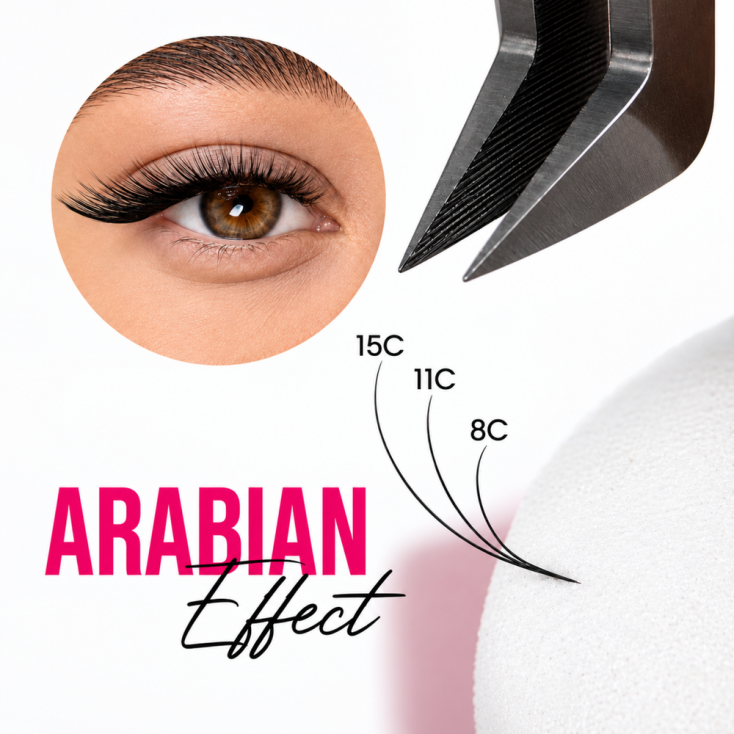
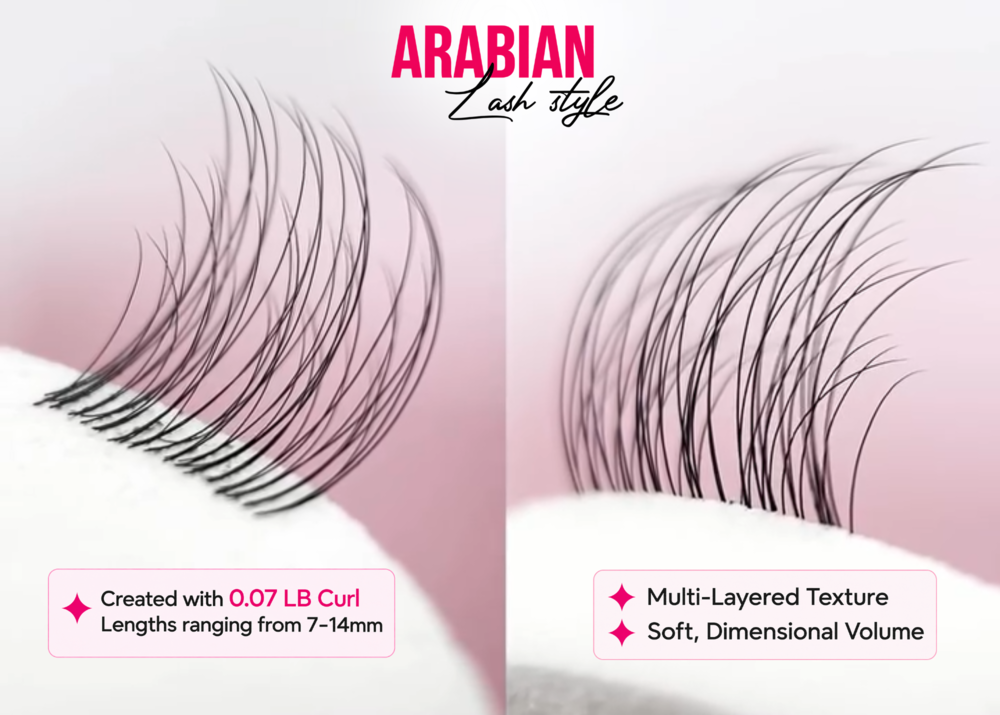
So, what exactly are Arabian Lashes? In simple terms, they are a layered and textured lash extension style that combines different lengths, visible spikes, strong lift and a defined lash line. Instead of creating one smooth, uniform top line, the artist intentionally allows certain extensions to rise above the main body of the set, creating peaks that give the lashes a more three-dimensional appearance.
Think of the design as building the lashes in layers rather than treating the lash line as one flat row. Shorter extensions provide the foundation, medium lengths build the body, and longer extensions become the points that catch the eye. That contrast is what gives Arabian Lashes their signature texture.
1. Arabian Lashes vs. Arabic Lashes: Are They the Same?
If you search for this style online, you may come across several names, including Arabian Lashes, Arabic lashes and Arabian lash effect. This can be confusing because different lash artists and brands may use slightly different terminology for very similar looks.
In practice, Arabian Lashes and Arabic lashes can refer to essentially the same visual concept, particularly when both describe a dramatic, layered and textured set. The terminology is not completely standardized across the industry, so one artist may call a set “Arabic” while another uses “Arabian.”
So, if you are wondering, “is Arabian and Arabic the same?”, the answer is generally yes in the context of current lash trends, although the exact map can vary from artist to artist.
2. What Defines the Arabian Lash Effect?
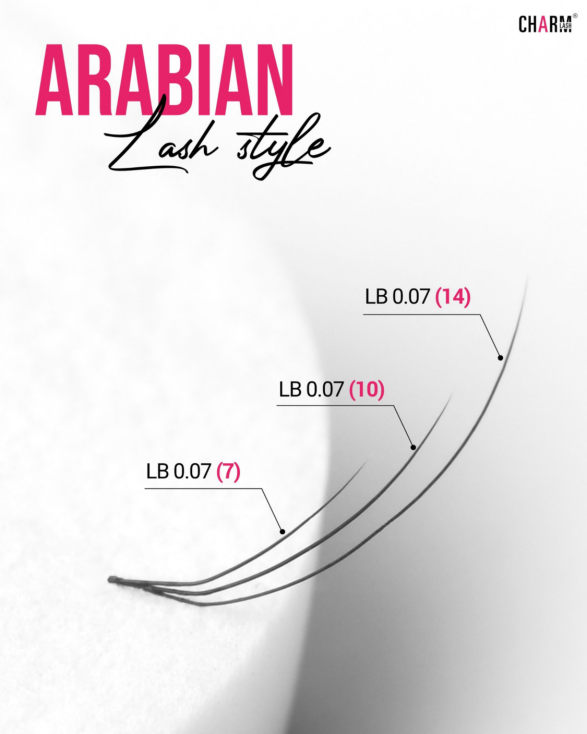
Four elements make the biggest difference when creating the Arabian lash effect: layered lengths, strong lift, dimensional texture and a defined lash line.
- Layered lengths: The lashes do not follow one perfectly even line. Short, medium and long extensions work together to create visible levels. The shorter base keeps the lash line connected, while longer fibers rise above the main body to form peaks.
- Strong lift: Arabian-inspired sets usually have enough curl to make the eyes look elevated and expressive. However, the strongest curl is not automatically the best choice. The curl needs to suit the client’s natural lash direction, eyelid space and desired result.
- Dimensional texture: Texture comes from the interaction between the layers. Longer fibers create the spikes, while shorter and medium lengths support them. This is why lashes with spikes, volume lashes with spikes and other textured designs are often associated with the style.
- Defined lash line: The base needs enough density to give the eyes definition and make the longer peaks stand out. If the foundation is too light, the spikes can look disconnected. If it is too dense, the layers can disappear into one heavy block.
3. Why Are Arabian Lashes Trending in 2026 & 2027?
The popularity of Arabian Lashes reflects a broader shift in what clients want from lash extensions. Instead of simply asking for “more volume,” clients are becoming more familiar with specific lash effects and looking for designs that give their eyes a particular shape or personality. The style also works extremely well in social content. Spikes, layered lengths and strong lift remain visible in photos and videos, while a completely uniform volume set can lose some of its visual impact from a distance.
At the same time, artists now have more specialty curls, materials and mapping options to experiment with. This gives Arabian Lashes plenty of room to evolve throughout 2026 and into 2027 rather than becoming locked into one formula.
II. Arabian Lashes vs. Other Popular Lash Styles
At first glance, Arabian Lashes may look similar to other textured styles, but the way the dimension is created makes them different.
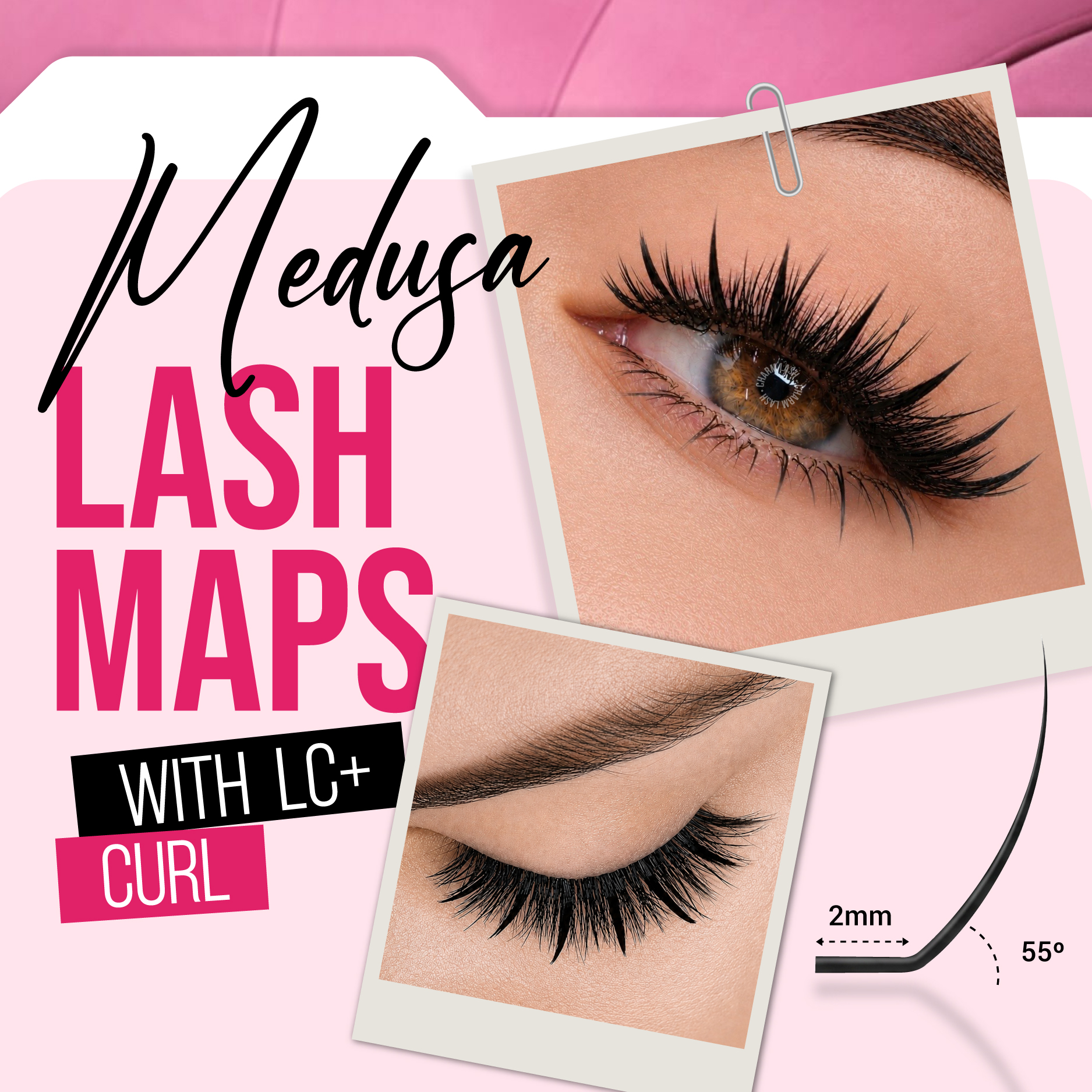
Classic lashes offer a clean, uniform look, while volume lashes add density and softness. Wispy lashes create an airy effect through length variation, whereas wet look lashes use narrow fans for sharper definition. Medusa Lashes emphasize bold spikes and dramatic texture. Arabian styling balances these techniques with layered lengths, defined peaks, and added density for a striking yet refined finish.
| Lash Style | Main Focus | Texture | Typical Effect |
| Classic Lashes | One extension per natural lash | Clean and uniform | Natural |
| Volume Lashes | Density and fullness | Soft and fluffy | Full |
| Wispy Lashes | Length variation | Airy and textured | Soft, dimensional |
| Wet Look Lashes | Narrow, defined fans | Sleek and glossy | Sharp |
| Medusa Lashes | Strong spikes | Highly textured | Bold and dramatic |
| Arabian Lashes | Layers, lift and peaks | Dimensional | Sculpted and lifted |
This distinction becomes especially useful when choosing lash mapping styles, because two maps can use similar lengths but produce very different results depending on how those lengths are positioned and layered.
III. The Anatomy of an Arabian Lash
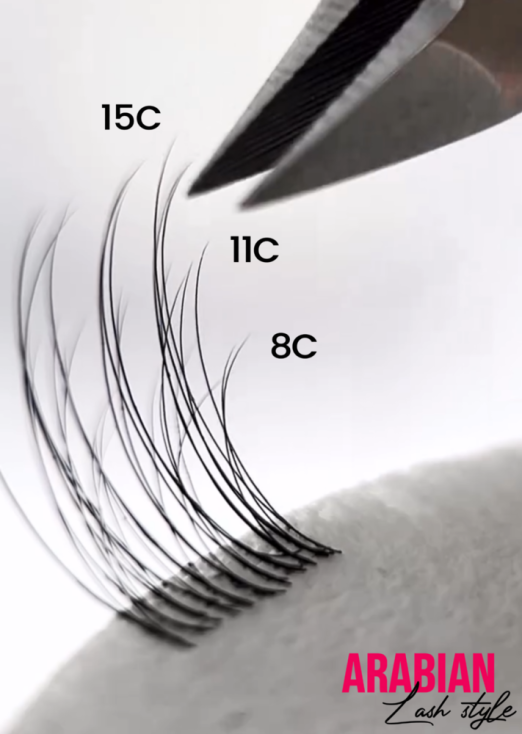
One of the easiest ways to understand Arabian Lashes is to stop thinking of the set as one continuous lash line. Instead, imagine three visual layers sitting on top of one another, with each layer contributing something different to the final silhouette.
1. Layer 1: The Peak Layer
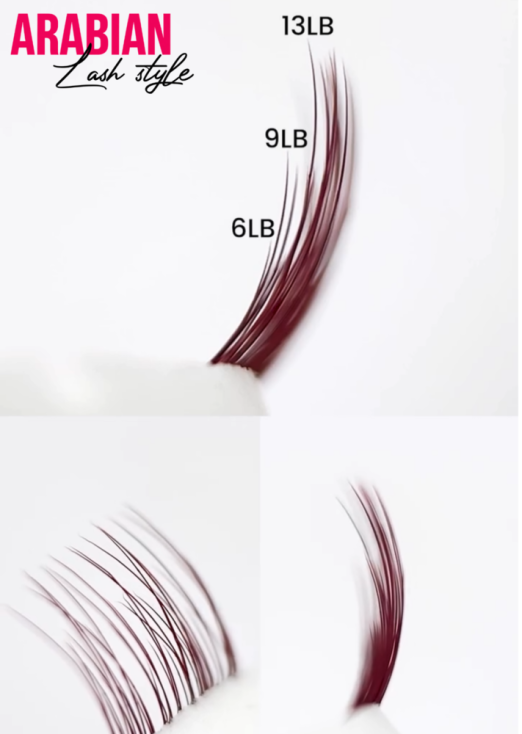
The peak layer is the most eye-catching part of the design. It uses the longest extensions to create the elevated points that give Arabian Lashes their sculpted appearance.Rather than creating one continuous line of long lashes, the peak lengths are strategically distributed across the map. For example, a 16 mm peak might sit above shorter 11 mm and 9 mm extensions.
The exact lengths should always be adapted to the client’s natural lashes, eye shape and desired intensity, but the principle stays the same: the longest length creates the peak, while shorter layers build the structure around it.
2. Layer 2: The Middle Layer
The middle layer connects the dramatic peaks to the shorter foundation. Its job is to add body and make the transition between lengths feel smooth rather than abrupt. If the peak reaches 16 mm, the middle layer might sit around 10 to 12 mm. The exact measurement is flexible, but there needs to be enough contrast for the peaks to remain visible without making the set look disconnected.
3. Layer 3: The Base Layer
The base layer gives the entire design its density and foundation. It generally uses the shortest length in the structure, creating a fuller and darker appearance close to the natural lash line. For example, a 9 mm base can support an 11 mm middle layer and a 16 mm peak, creating the characteristic Short → Medium → Long relationship of a triple-layered Arabian structure.
4. Why Length Variation Creates Dimension
What makes Arabian Lashes look dimensional is not simply the use of long extensions. It is the contrast between different lengths working together.
| Length | Role | Visual Effect |
| Shortest | Builds the foundation | Density and depth |
| Medium | Connects base and peak | Body and transition |
| Longest | Creates the peak | Height and definition |
This is why simply adding longer lashes does not automatically create an Arabian effect. If all the extensions are close in length, the lash line can look relatively flat because there is not enough contrast for the eye to perceive different levels.
IV. How to Create the Arabian Lash Effect
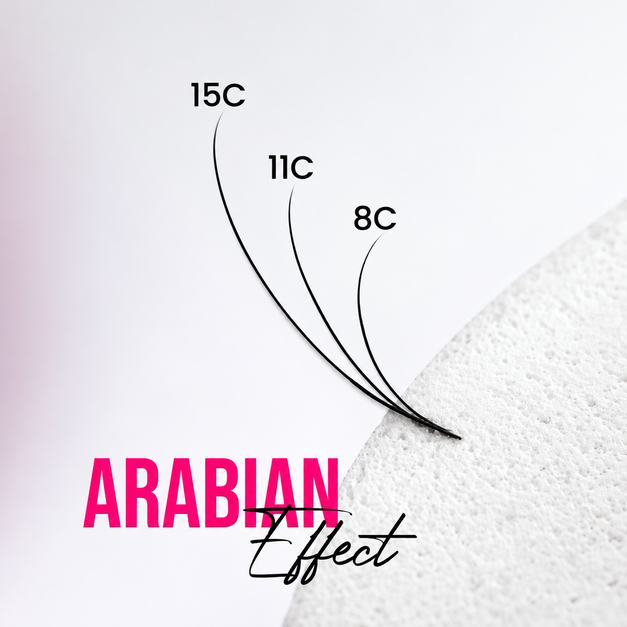
There is a common misconception that Arabian Lashes require one specific thickness, curl or application technique. In reality, the style is a flexible approach that can be customized through different diameters, curls, lengths and volume techniques.
Diameters such as 0.03 mm and 0.05 mm are commonly useful for lightweight volume and layered texture. Artists can also combine narrow fans, layered fans and strategically placed spikes to create the characteristic peaks and depth.
1. Step 1: Analyze the Client’s Natural Lashes
Before thinking about the map, look closely at the natural lashes. Their length, thickness, density and growth direction will tell you much more about what you can safely create than a saved Instagram map ever will.
Pay particular attention to the natural direction of the lashes. A dramatic curl may look beautiful in isolation, but if it does not work with the client’s growth direction, the finished set can appear uneven or lose the clean lift you were aiming for.
2. Step 2: Analyze the Eye Shape
Next, look at the client’s eye shape with the eyes naturally open. Consider the visible eyelid space, the direction of the outer corner and where the eye naturally reaches its highest point.
You may see references to Arabian eyes when researching the trend, but Arabian Lashes are not restricted to one particular eye shape or ethnicity. The same principles can be adapted for almond, hooded, downturned and monolid eyes when the map is customized properly.
3. Step 3: Choose the Curl
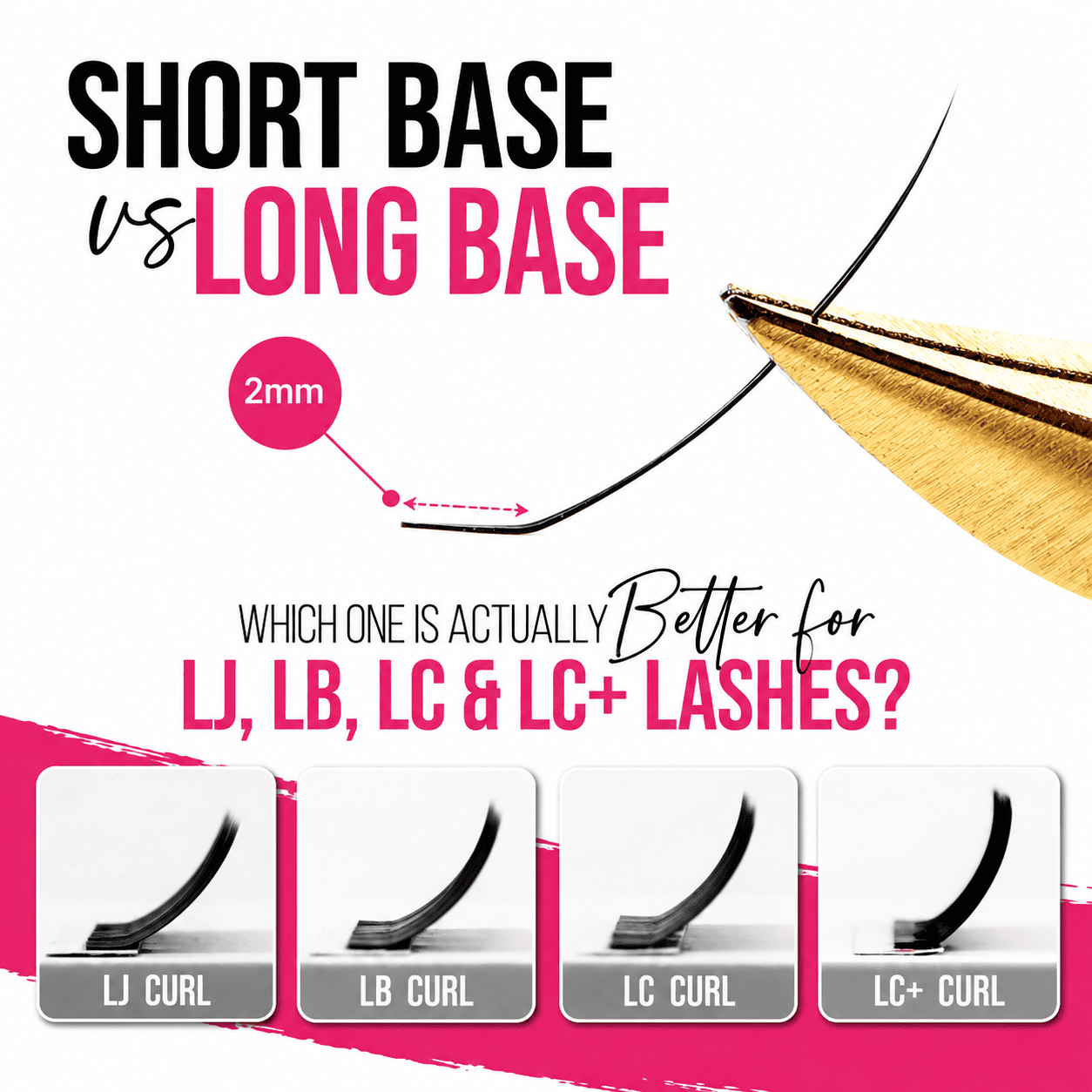
Once you understand the natural lash direction, you can start thinking about curls. CharmLash’s L-family system offers four different levels and purposes of lift: LJ for a gentler lift, LB for a balanced everyday effect, LC for a more open-eye appearance and LC+ for maximum lift and definition.
These curls are not a mandatory formula for Arabian Lashes. Traditional C, CC, D, L and M curl lash extensions can still be excellent choices depending on the client. When comparing L curl vs M curl, the decision should come down to natural lash direction and desired projection rather than simply choosing the curl that looks most dramatic.
4. Step 4: Build the Length Structure
Once the curl is selected, establish the length hierarchy. A simple structure might be 7 mm → 10 mm → 14 mm, while a longer design could use 9 mm → 11 mm → 16 mm if the client’s natural lashes can support it.
The goal is to create enough contrast for the layers to remain visible without making the transition feel forced. If the lengths are too similar, the texture disappears. If the difference is too extreme, the peaks may look disconnected.
5. Step 5: Create the Lash Map
A simple starting point could use 6 to 7 mm in the inner corner, 8 to 9 mm through the transition, 10 to 12 mm through the body and 13 to 14 mm at selected peak points.
From there, adjust the map according to the client’s eye shape. Instead of putting the longest length continuously across one section, treat the peaks as accents. This gives you much more freedom than simply following a fixed set of lash extension maps and makes it easier to create customized lash layouts.
6. Step 6: Check the Final Silhouette
Once the application is finished, have the client open their eyes naturally and look at the set from the front. Check whether the peaks are balanced, whether the outer corner is pulling downward and whether the longest sections remain visible.
With Arabian Lashes, the final silhouette matters just as much as the individual attachments because the entire style depends on how the layers work together visually.
V. Arabian Lashes Mapping for Different Eye Shapes
The biggest advantage of Arabian Lashes is their flexibility. Instead of using the same map for every client, artists can adjust peak placement, curl and length to work with the individual eye.
1. Arabian Lashes for Almond Eyes
Almond eyes offer plenty of flexibility. Longer peaks can be placed through the center or outer area to enhance the natural shape, while moving the main peak slightly inward can create a more open-eye effect. For elongation, gradually increasing length toward the outer third can work well.
2. Arabian Lashes for Hooded Eyes
For hooded eyes, excessive length can disappear beneath the lid. A suitable lifted curl can improve visibility, but length and weight still need to be controlled so the layered peaks remain visible without crowding the lid.
3. Arabian Lashes for Downturned Eyes
Avoid placing the longest peak directly at the outer corner, as this can emphasize the downward direction. Instead, position the strongest peak slightly inward and gradually reduce the outer-corner length to create a more lifted appearance.
4. Arabian Lashes for Monolid Eyes
Always evaluate the map with the eyes open because some layers may become less visible when the lid relaxes. A suitable specialty curl can improve projection, but it should still follow the client’s natural lash direction for both visibility and compatibility.
VI. How to Choose Lash Diameter and Material for Arabian Lashes
1. Choosing the Right Diameter
Diameter should never be chosen on its own. Fan size, extension length and natural lash strength all contribute to the overall weight of the attachment.
Fine diameters such as 0.03, 0.05 and 0.07 mm give artists more flexibility when creating volume fans, but finer does not automatically mean lighter. A large fan can still carry significant weight, so the complete design should always be considered before application.
2. Choosing the Right Lash Material
Material can change the personality of the same map. Two sets can use almost identical lengths and still look completely different because the fibers create different levels of softness, density and definition.
For artists exploring trendy lashes, CharmLash’s four highlighted materials offer different finishes: Cashmere Silk for a soft, lightweight-looking appearance, Premium Matte for a deeper and more sophisticated lash line, Super Silk for a polished and defined finish, and Cashmere Mink for a softer volume aesthetic.
3. Can Premade or Promade Fans Be Used for Arabian Lashes?
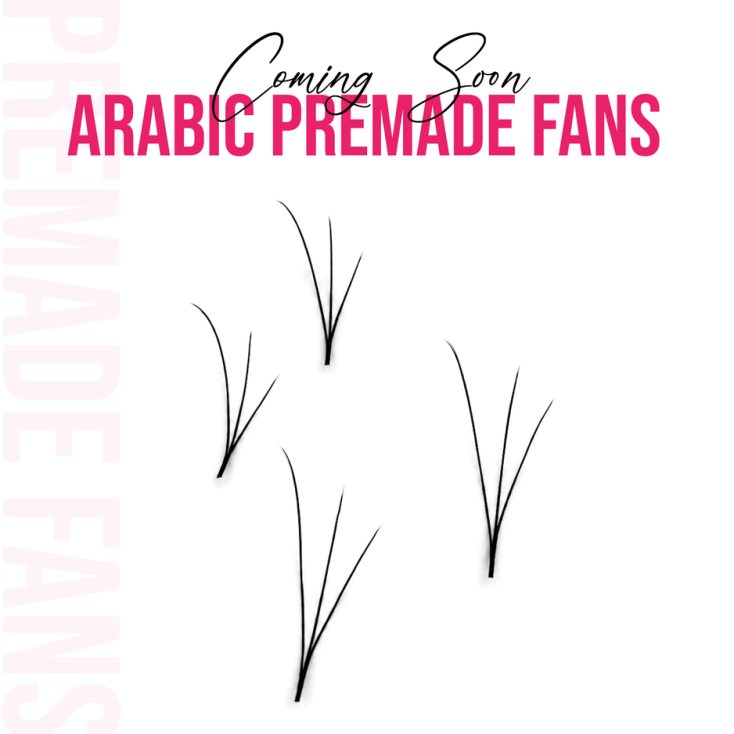
Yes. Premade and promade fans can be useful when artists want to improve application speed without losing the dimensional character of the style.
One practical approach is to use fans for the base and middle layers, then add individual longer extensions or narrower fans to create the peaks. This keeps the application efficient while allowing the artist to control exactly where the texture appears.
VII. Common Arabian Lashes Mistakes to Avoid
1. Mistake 1: Using Only Long Lashes
A dramatic set does not need to be long everywhere. When every section uses the same long length, there is no clear distinction between the body and the peaks, so the dimensional effect becomes much weaker. The drama should come from contrast rather than simply increasing length. Shorter supporting fibers are what make the longest spikes look more noticeable.
2. Mistake 2: Using the Same Length Everywhere
Using one length throughout a large section can create a flat silhouette, even when the lashes are thick and dark. Alternating shorter sections with carefully placed peaks creates much more movement while keeping the lash line cohesive.
3. Mistake 3: Choosing Curl Without Considering Natural Lash Direction
A curl should never be selected simply because it is trending. Natural lash direction determines how the extension will sit and how much lift will actually be visible. This becomes particularly important when working with L and M curl lash extensions or comparing specialty curls. The right choice is the one that provides the desired projection while remaining compatible with the natural lash.
4. Mistake 4: Making the Set Too Heavy
Because Arabian Lashes are visually dramatic, it can be tempting to combine longer lengths, larger fans and stronger curls at the same time. However, sophisticated volume is often about knowing when to stop. Drama can come from placement, texture and curl without continuously adding more weight.
5. Mistake 5: Ignoring Eye Shape
A beautiful map is not automatically a beautiful map for every client. Eye shape, lid space and outer-corner direction can completely change how a particular length or peak is perceived. Professional mapping is therefore more than copying a diagram. The artist needs to take the idea behind the map and adjust it until the final silhouette works with the individual client.
VIII. Why CharmLash Is a Strong Choice for Arabian Lashes Styling
As lash styling becomes more customized, having more options in curl, length and material gives artists greater creative freedom. This is especially valuable for Arabian Lashes, where small changes in curl or length placement can noticeably change the final result.
1. A New Curl System Designed for More Styling Possibilities: L-Family Curl
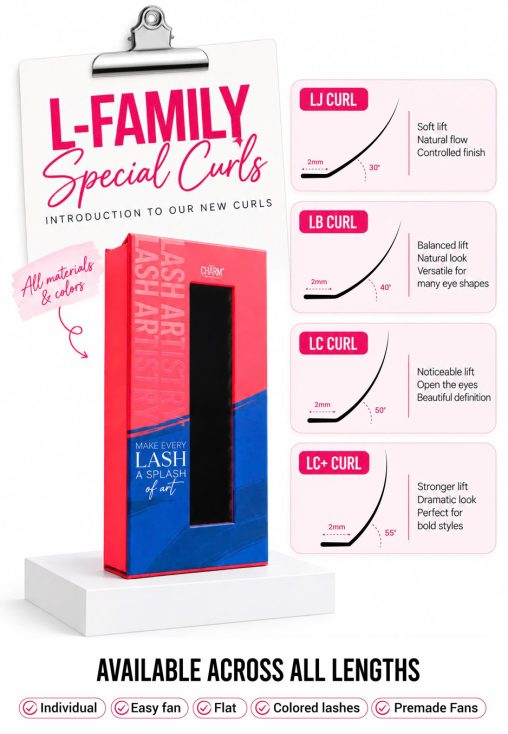
Our L-family curl system includes LJ, LB, LC and LC+, offering several levels of directional lift within one cohesive curl family. The system uses a 2 mm base structure and offers lengths from 5 to 18 mm, making it practical for both shorter foundation layers and longer peak sections.For an Arabian-inspired set, this range gives artists more freedom to control how each layer projects from the eye.
2. Multiple Lengths for Layered Lash Mapping
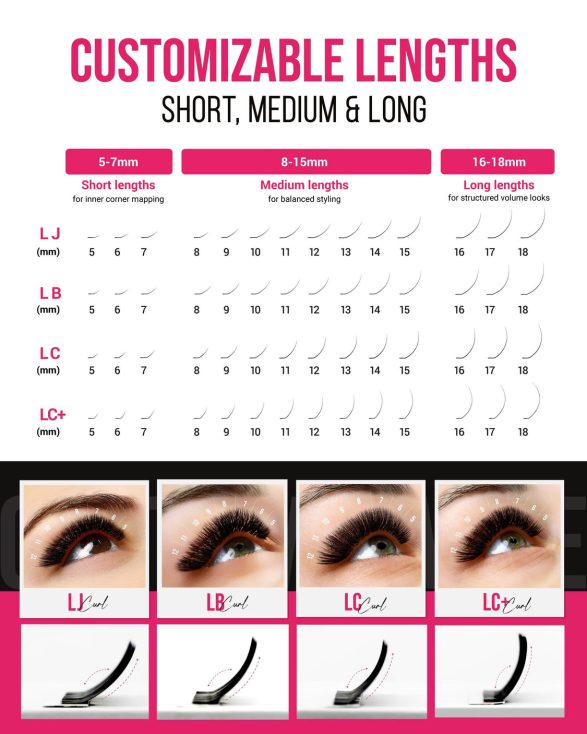
Layered mapping only works when there are enough length options to create visible contrast. Shorter transition lengths, medium body lengths and longer peak fibers allow artists to build a controlled progression instead of forcing every client into the same pattern.
CharmLash’s 5 to 18 mm range makes it easier to create customized lash layouts and adapt the same concept to different eye shapes and styling preferences.
3. Multiple Materials for Layered Lash Mapping
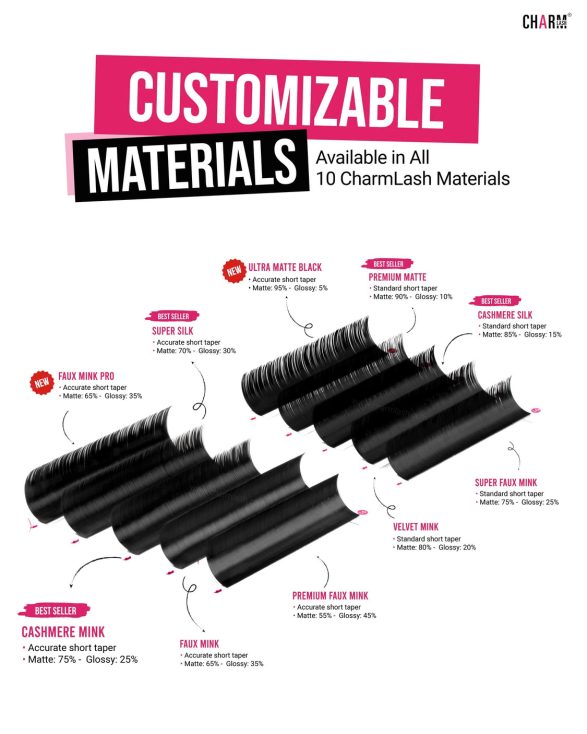
We offer 10 different lash materials, giving artists more flexibility to customize the same map and create different finishes. From glossy and silky textures to semi-matte and matte options, the collection allows the final result to move from soft and natural to defined and dramatic.
IX. Conclusion
Arabian Lashes are more than a viral trend. Their signature look comes from the thoughtful combination of layered lengths, strategic spikes, directional lift and a well-balanced map, giving artists plenty of room to create both soft and dramatic interpretations.
As lash styling continues to evolve in 2026 and 2027, experimenting with different curls, materials and mapping techniques can take the look even further. With the right understanding of natural lashes and eye shape, artists can turn the Arabian lashes effect into a customized signature style rather than simply copying a trending map.
👉 Explore more:
Medusa Lash Map with LC+ Curl: A Creative Mapping Guide for Lash Artists
Camellia Fan Lashes for Perfect Wispy Volume Lash Extensions
Hybrid lashes: Why salons love them & how suppliers help
L Family Special Curl Lashes: LJ, LB, LC & LC+ Explained
👉 Follow CharmLash for the latest lash trends, products & inspiration!
LinkedIn: CharmLash
Instagram: CharmLashvn
Tiktok: CharmLash23