


When lash fibers sit outside the effective grip zone, a fan may slip, rotate or lose fibers during pickup and transfer. Understanding the sweet spot in lash tweezer design helps artists evaluate a tool based on actual gripping performance rather than appearance alone.
This guide explains what the sweet spot is, why it matters, how to locate it and how it varies across different tweezer shapes and lash techniques.

What Is the Sweet Spot in a Lash Tweezer?
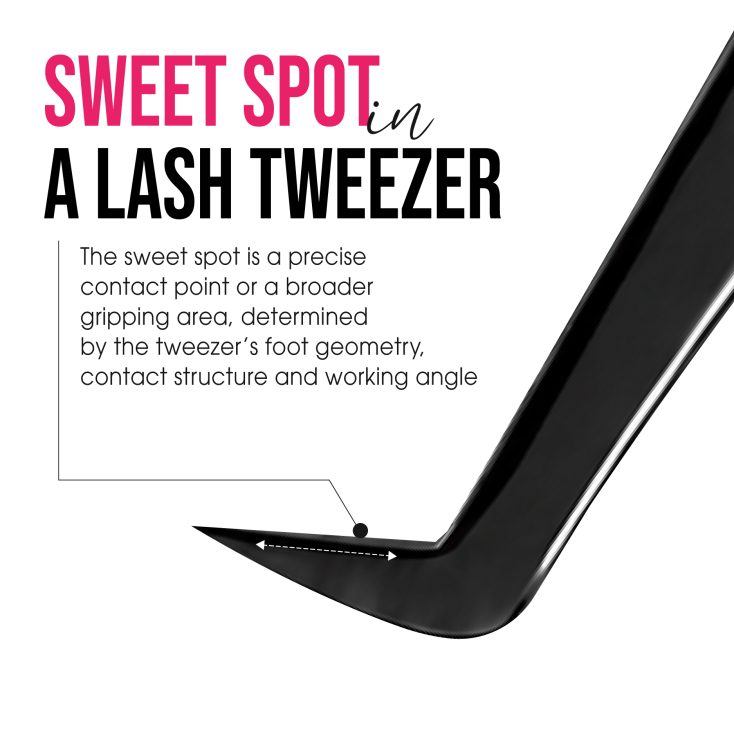
The sweet spot in lash tweezer design refers to the point or area along the gripping surface where the tweezer holds lash fibers most securely under normal working pressure.
In practical use, the sweet spot may function as a concentrated gripping point or a broader contact zone, depending on the tweezer’s contact structure.
Therefore, the sweet spot should not be understood as one fixed position that applies to every tool. It is the functional grip zone where the intended fibers can be held securely without excessive squeezing or repeated repositioning.
Where Is the Sweet Spot Located?
The tweezer tip is the physical end of the tool, while the sweet spot is the section that performs most effectively during pickup.
Depending on the tweezer design, the sweet spot may be located:
- At the end of the tip
- Slightly behind the tip
- Toward the middle of the grabbing point
- Across a broader section of the gripping surface
Artists should test several positions rather than assume that the very end of the tip always provides the strongest grip.
Why Does the Sweet Spot in Lash Tweezer Matter?
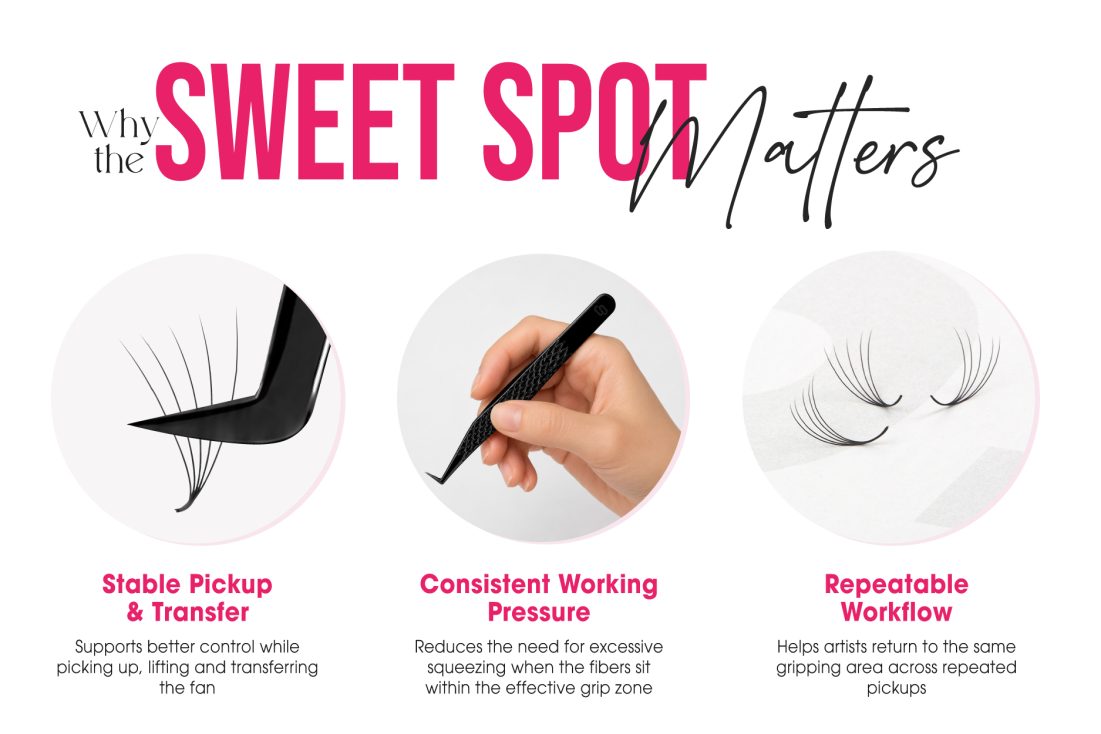
The sweet spot in lash tweezer design affects how securely the tool holds fibers during pickup, lifting and transfer.
When the intended fibers sit within the effective grip zone, the artist can usually maintain better control using normal working pressure.
More Stable Pickup and Transfer
During volume work, the artist must control several fine lash extensions at the same time. If the fibers sit outside the effective gripping area, they may shift, separate or fall from the bundle.
The artist may then compensate by:
- Squeezing the tweezer harder
- Changing the pickup angle
- Repositioning the tool repeatedly
- Attempting the pickup again
A stable grip must also continue after the fan leaves the strip. When a fan is not held securely, it may rotate inside the tweezer, slide toward the edge of the grabbing point, lose individual fibers or change shape during movement.
Locating the sweet spot in lash tweezer design can support more controlled pickup, lifting and transfer. However, the sweet spot does not create a well-shaped fan by itself. Fan symmetry, spread and base quality still depend on the artist’s technique, fiber placement, lash diameter, pickup method and pressure control.
More Consistent Working Pressure
When fibers repeatedly slip, artists may begin squeezing the tweezer harder. This does not always solve the underlying issue.
If the fibers are positioned outside the effective grip zone, excessive force may increase hand tension without improving pickup consistency.
A suitable sweet spot should allow the artist to hold the intended fibers securely without relying on maximum closing pressure.
A More Repeatable Workflow
Once an artist knows where a tweezer grips most reliably, returning to the same area becomes easier. This may help reduce failed pickups, constant repositioning, changes in hand pressure and inconsistent fan transfer.
Understanding the gripping area also helps artists evaluate an existing tool more accurately before deciding that it is unsuitable.
However, a slipping fan does not automatically mean the artist has missed the sweet spot. Similar problems may also result from:
- Adhesive or product residue
- Damaged or misaligned tips
- An unsuitable pickup angle
- Excessive or insufficient pressure
- A fan dimension beyond the tool’s comfortable capacity
- A tweezer shape that does not suit the technique
The sweet spot affects pickup and handling stability. It does not directly determine adhesive curing or long-term lash retention.
How to Locate the Sweet Spot in Lash Tweezer
Locating the sweet spot in lash tweezer design requires observation and repeated pickup under normal working conditions.
The first point where the gripping surfaces meet provides a useful starting area. However, it should be confirmed through actual fan pickup before being treated as the tool’s most reliable gripping zone.
Step 1: Identify the Initial Contact Area
Hold the tweezer lightly in your dominant hand using your normal working grip. Gradually close it without applying maximum pressure.
Pay attention to:
- Where the gripping surfaces begin to meet
- Which part of the grabbing point closes first
- Whether the contact feels even
- Whether unusually strong pressure is required
Treat this initial contact area as the first position to test rather than a confirmed sweet spot.
Visual contact alone does not show how the tool will perform with different lash diameters, fan sizes or working angles.
Step 2: Test Different Positions Along the Grabbing point
Begin with a small, manageable fan, such as a 2D or 3D fan.
Using normal working pressure, try picking up the fan at several positions:
- Near the tip
- Slightly behind the tip
- Toward the middle of the grabbing point
At each position, observe whether the fan:
- Slips from the tweezer
- Rotates after pickup
- Loses individual fibers
- Changes shape during lifting
- Remains stable while being moved
The strongest gripping area may be concentrated at one position or extend across a broader contact zone.
Step 3: Confirm the Sweet Spot Through Repeated Pickup
One successful pickup is not enough to confirm how the sweet spot in lash tweezer design performs under repeated use. Repeat the pickup several times at the position that produced the most stable result. Check whether:
- The fan remains secure across repeated pickups
- You can return to the same section consistently
- The fan stays controlled during lifting and transfer
- Normal working pressure is enough to maintain grip
After testing with a small fan, repeat the process using the fan dimension and lash diameter you normally work with.
A gripping area that performs well with a 2D or 3D fan may not provide the same control with a larger Russian or mega-volume fan. Handmade and premade fans may also require different pickup positions.
How the Sweet Spot in Lash Tweezer Varies by Shape and Technique
The position and size of the sweet spot in lash tweezer design can vary according to the gripping structure, working angle and intended technique.
There is no single sweet-spot position or size that works equally well for every lash artist.
The geometry of the gripping surface influences where and how the tweezer tips make contact.
Relevant factors include:
- Grabbing-point length
- Grabbing-point width
- Tip angle
- Inner-tip geometry
- Closure
- Working angle
A shorter grabbing point may make the effective grip zone easier to identify because there is less contact area to test. However, a shorter grabbing point is not automatically more precise or more suitable than a longer one.
A longer grabbing point may provide several possible pickup positions or a broader contact area. However, its strongest grip may still be concentrated within one section rather than extending across the entire grabbing point.
Boot and L-shaped tweezers also approach the fan from different angles. The artist’s wrist position and pickup direction can therefore affect which section of the grabbing point makes contact with the fibers.
Different tweezer shapes create different contact structures. For a broader comparison, explore the main types of lash extension tweezers and how their shapes support different application methods.
Tweezer shape provides a useful starting point when choosing a tool, but the most effective grabbing point should still be confirmed through actual pickup testing.
How Technique Changes Sweet-Spot Priorities
Different lash techniques place different demands on the gripping surface.
The sweet spot in lash tweezer design should therefore be evaluated according to the actual pickup method rather than grip-zone size alone.
Technique | Sweet-spot priority | Recommended tweezer | |
| Isolation and classic pickup | Precise contact that is easy to locate repeatedly | 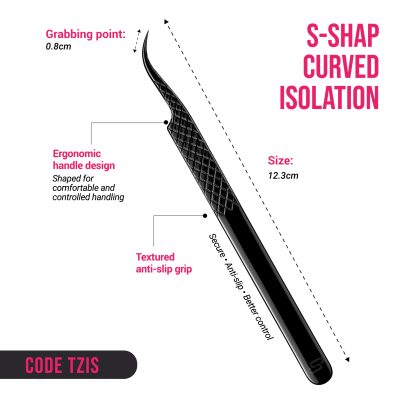 | 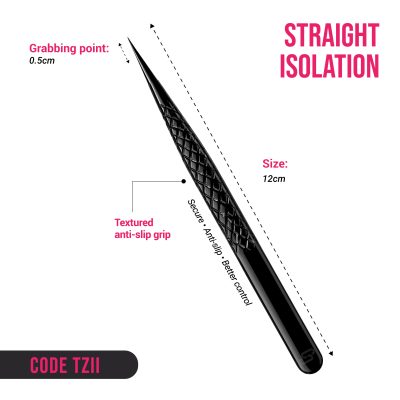 |
| Light and Russian volume | Balanced gripping area for fan control | 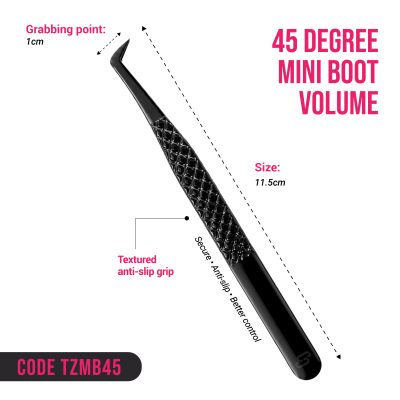 | |
| Mega volume | Contact area suitable for the intended fan dimension | 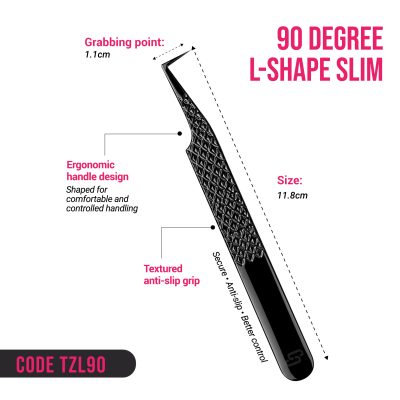 | 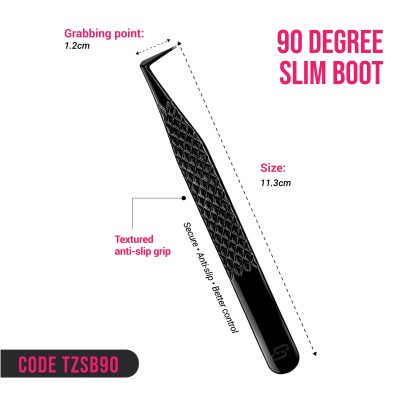 |
| Premade-fan pickup | Stable grip that maintains control of the fan base | | 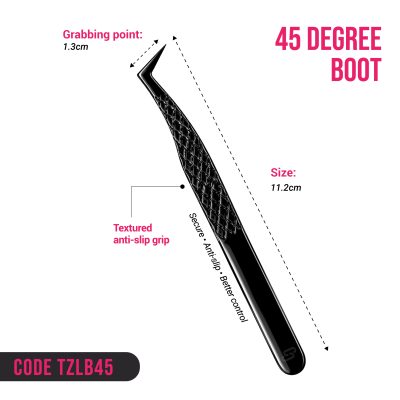 |
These priorities should not be treated as universal rules.
Isolation does not always require the narrowest possible sweet spot. Mega volume does not always require the widest. Similarly, lower tension is not automatically better, and a boot tweezer is not automatically the best option for every volume artist.
Some techniques may benefit from broader contact across the gripping surface, while others may work effectively with a more localized sweet spot.
The right combination depends on:
- Hand pressure
- Working angle
- Fan-making method
- Lash diameter
- Fan dimension
- Tweezer tension
- Individual comfort and preference
The most reliable way to evaluate a tweezer is to use it under the same conditions in which it will actually be used.
Conclusion
The sweet spot in lash tweezer design may be a localized gripping point or a broader functional contact zone. The first point where the tips meet is only a starting position; repeated pickup under normal working pressure is needed to confirm where the tool performs most consistently.
Because tweezer geometry, working angle, fan dimension and technique all affect gripping performance, no single sweet spot works equally well for every artist. Testing the tool under realistic working conditions remains the most reliable way to evaluate it.
👉 Explore more: