


At CharmLash, we take immense pride in our diversity line. A wide range of vibrant lashes enables our community of lash artists and suppliers to push the boundaries of creative design. However, creating a lash that maintains a brilliant hue from base to tip is a complex technical challenge.
Recently, some lash artists and suppliers have reached out to us with questions about the delicate nature or twisty appearance of the tips of colored lash extensions. With that spirit, let us drive you through the process of creating matte brown lashes in particular and trending colors in general.
I. Step 1: The original black PBT fiber
For most of the time, the original synthetic lash fibers come in black. This is where we start.
II. Step 2: The color peeling process
The original black fiber must first go through a color peeling procedure, then be dyed the desired color to guarantee that a shade belonging to our matte brown lashes collection or other matte-colored lash collections looks vibrant and true to tone.
This is the only way to produce a neutral canvas that will allow a new matte color to be successfully absorbed without being muddy by the dark undertones that are naturally present in the fiber.
In this stage of color peeling, the PBT’s chemical structure is “opened.” Imagine it as making tiny passageways for the dye to reach the center of the strand. This alters the material’s physical state while producing the rich, steady matte color payoff you adore. The fiber loses its natural resin-sealed smoothness and becomes generally more fragile when the original pigment is removed.
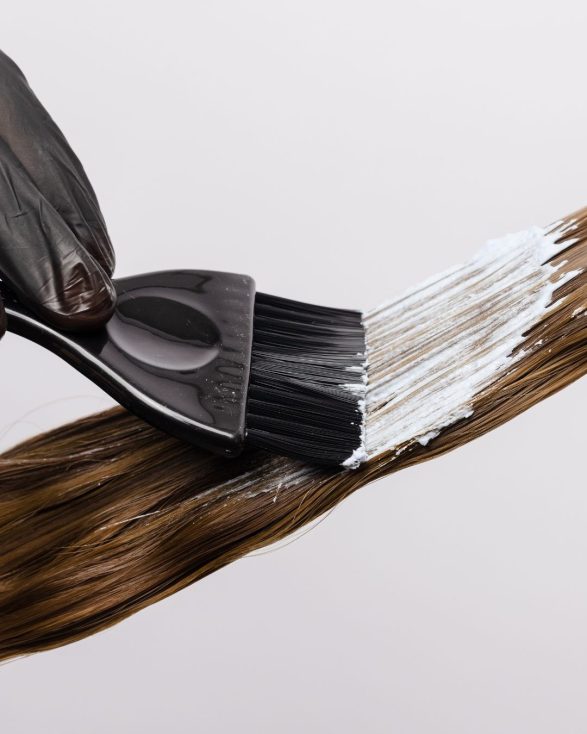
Here’s the motto. Think of it as bleaching your hair to dye it after. It’s just like hair bleaching weakens hair structure, and fiber bleaching reduces molecular stability in the lash fiber.
III. The tapering process and delicate tips
The most important time for a matte-colored lash is during the tapering phase. To achieve the natural, elegant point that defines a premium extension, each fiber’s tip must be thinned. This is a precise mechanical process in which the fiber is “shaved,” or tapered, to a fraction of its original diameter.
When we taper a previously color-peeled fiber, we work with a material that is structurally more “open” than a standard dark fiber. Because the color peeling process has already softened the internal bonds of the PBT, the mechanical stress of tapering can occasionally cause the very fine points to appear slightly frayed or “split.”
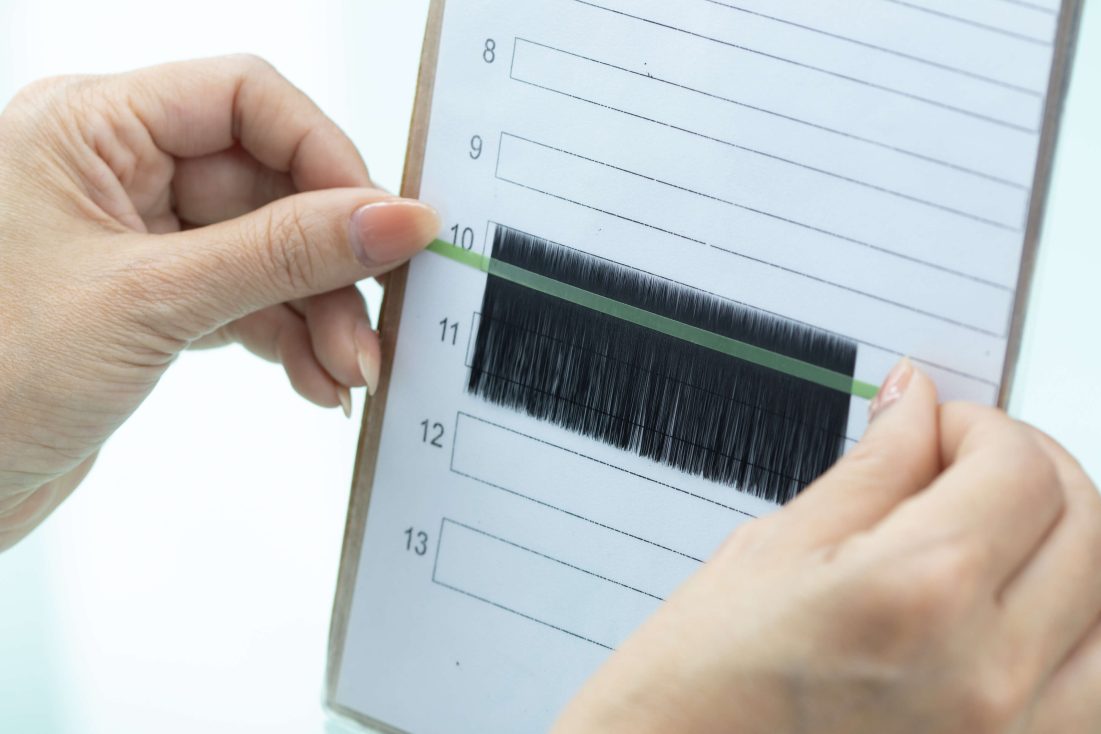
The peeled structure is more visible as the taper becomes thinner. This is why you may notice a twisty feel, especially at the tips. It is not a sign of poor-quality material but rather a physical reaction caused by a bleached fiber being honed to a microscopic level. It is the result of balancing the desire for a clean, natural appearance with the chemical realities of high-intensity dyeing.
IV. Why twisting happens (especially on matte brown lashes)
Many of the recent inquiries have centered on our matte brown lashes. These shades are particularly susceptible to twisting at the tips due to the specific micro-treatments required to reduce shine and create that sophisticated matte finish.
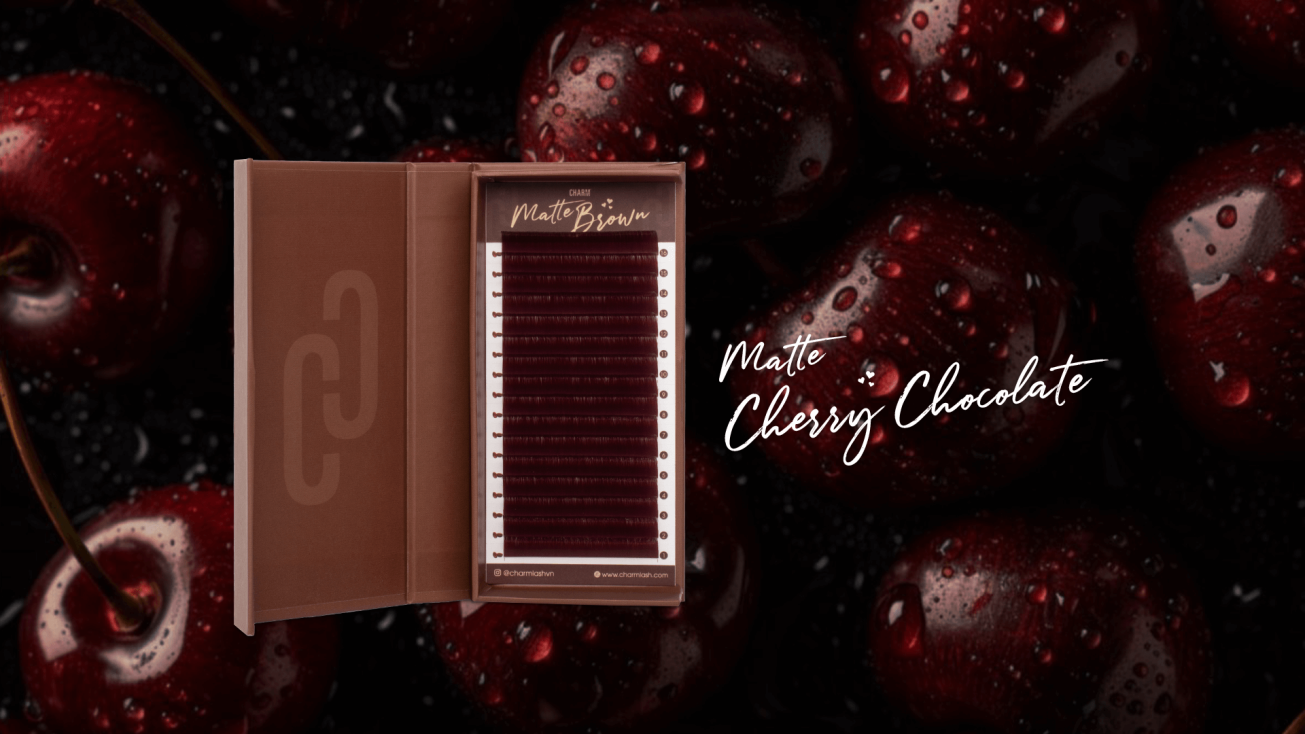
When the color peeling protocol softens the fiber structure and is then followed by a matte treatment, the result is a slight increase in flexibility. For accurately tapered styles, this means the tips are significantly more delicate. Under certain humidity or storage conditions, this increased flexibility can lead to tip twisting. It is important to understand that this is a physical reaction to the material’s treatment. The very process that makes the lash beautiful also makes it more responsive to its environment.
V. Why trending colors always carry a higher chance of twisting
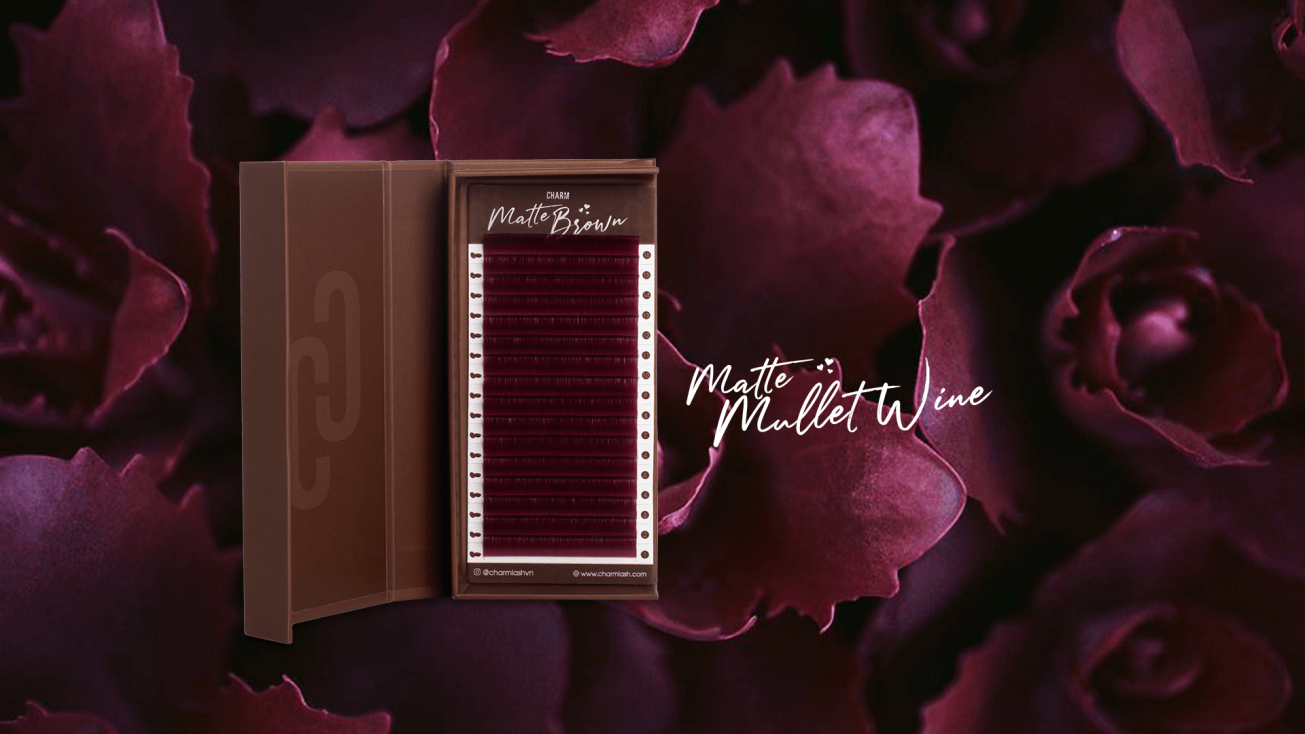
For lash business owners, it is vital to understand the relationship between fashion and fiber. Trending colors require the most intensive processing.
The more trendy the shade, the more technical treatment is involved in its creation. This leads to a higher level of structural vulnerability. It is a reality of the industry: trend-driven products always carry a higher material risk than classic black. As a business owner, selling these matte colors requires awareness and a move away from demand chasing toward a more educated portfolio approach.
VI. What should lash business owners be aware of?
We believe in positioning our partners for success by being honest about production realities. Selling trending colors requires awareness, not just demand chasing. To protect your business and maintain high client satisfaction, we recommend the following:
- Educate your customers: Before selling trend-based sets, manage client expectations regarding the structure and durability of the fiber.
- Understand the trade-off: Recognize that the softness and unique matte color of a matte brown lash come with a different structural profile than a standard lash.
- Manage your portfolio: Factor your risk tolerance into your product decisions, knowing that fashion colors require more delicate handling and maintenance.
VII. What we do to minimize the twisting
While the physics of fiber processing cannot be eliminated, we take rigorous steps to ensure our matte-colored lines remain the most reliable on the market. In detail, we have been employing:
- Controlled color peeling levels: Using the minimum chemical intervention necessary to achieve the desired shade.
- Batch testing: Every collection undergoes testing before release to ensure it meets our structural standards.
VIII. Our point of view
We believe there are no such things as “better lash extensions.” The only correct thing is the style you want to create. Every choice in your inventory should be a reflection of both your brand positioning and the specific look your clients are chasing. What we do here is to help you all understand the physical nature of these fibers, allowing you to choose with confidence.
1. Original black lashes
Black lashes are the classic and reliable choice. They provide a bold, dramatic, or even natural finish depending on various specifications. While they are structurally robust and easy to deal with, relying solely on black lashes can make it quite difficult to create a unique signature. In a crowded market, staying basic makes it harder to build a competitive edge.
2. Trending matte brown and other matte-colored shades
Our colored lashes are designed for those who want to stand out. These trending colors and high-fashion shades are exceptionally versatile, complementing a wide range of skin, hair, and eye colors. Because these shades are rare and unique, they offer a distinct competitive advantage.
By offering what your competitors do not, you position yourself as a high-end creator. The nature of these fibers is softer and more delicate, which may lead to a higher chance of twisting, but that is the trade-off for the elegance and the aesthetic they provide.
To sum up, don’t be scared if your matte-colored lash extensions seem slightly twisted. It has gone through a lot of phases to reach your desired shade, and our team has been working on a solution to crack this case.
Check out our updates on our exclusive, diverse line of matte-colored lash extensions on Instagram and Pinterest!