

The pursuit of perfect lash extension retention is often wrongly centered on finding a miracle adhesive or a specific application technique. While those elements are important, the most critical, yet often overlooked, factor lies in the invisible forces of your treatment room: the environmental control of your space. Understanding the precise science of how lash glue temperature and humidity interact with your adhesive is not merely helpful – it is essential for achieving client satisfaction, eliminating frustrating premature shedding, and building a sterling reputation.
If you’ve ever struggled with adhesive that cures too fast or too slow, or suffered from mysterious retention issues, the answer almost always comes back to the delicate balance between these two forces. This comprehensive guide will dissect the complex chemistry of your adhesive, detailing the critical role that lash glue temperature and humidity play in every single appointment. Mastery of lash glue temperature and humidity is the definitive step toward professional success.
I. The chemistry of the bond: The foundation of lash glue temperature and humidity control
The active ingredient in virtually every high-quality eyelash adhesive, from the best adhesive eyelash formulas to the most specialized professional products, is cyanoacrylate. Cyanoacrylate is a family of adhesives derived from ethyl cyanoacrylate and related esters (according to the Cyanoacrylate Wikipedia page).
This rapid-bonding compound cures through a process called polymerization, a chemical reaction triggered by the presence of trace amounts of moisture (hydroxyl ions) found in the air (humidity) and on the natural lash.
Cyanoacrylate is a chemical sleeper that requires a specific level of moisture to activate and create a strong, durable bond. The speed and quality of this essential curing process are entirely controlled by the synergy between lash glue temperature and humidity in your room. Any imbalance in the lash glue temperature and humidity balance directly compromises the longevity of the extension. When you evaluate the variables affecting your work, the control of lash glue temperature and humidity must be the first step. The ideal interaction between these two elements creates a flexible, strong, and permanent bond.
II. The critical role of humidity (the accelerator)
Humidity, measured as relative humidity (RH), is the volume of moisture content in the air. For lash artists, humidity is the central factor, as it acts as the primary catalyst for the glue’s polymerization. This factor is half of the critical equation governing lash glue temperature and humidity.
A. The Goldilocks zone: Ideal humidity for lash extensions
Most standard lash extension adhesives, including the best lash extension adhesive formulas, are engineered for optimal performance within an RH range of 40% to 60%. This range represents the best humidity for lash extensions because it ensures the adhesive cures at its intended rate, leading to a strong, lasting, and flexible bond. Achieving this precise environmental balance in terms of lash glue temperature and humidity is the key to minimizing premature shedding.
B. The dangers of high humidity
When RH climbs above 60% (and especially 70% or higher), the adhesive is overwhelmed by moisture. This drastically shifts the environmental equation, disrupting the ideal lash glue temperature and humidity balance and leading to immediate problems.
1. Shock Curing (Curing Too Fast)
High humidity forces the cyanoacrylate to polymerize almost instantly, also known as “shock curing.”
- The Problem: The exterior of the bond is cured, but the interior often remains liquid or uncured. This creates a brittle, weak, and non-porous bond that easily snaps or pops off the natural lash. This is a common retention issue that proves humidity affects lash extensions significantly.
2. The High Humidity Solution
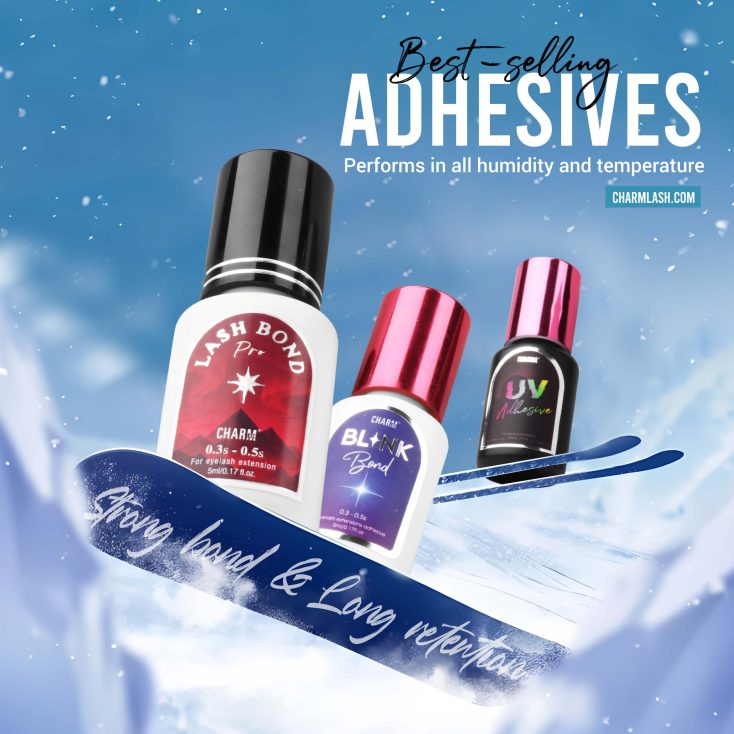
Working in a high-humidity environment means adjusting your materials to address the imbalance in lash glue temperature and humidity. Artists must seek out the best lash glue for high humidity or the best lash extension glue for high humidity. You can compare various formulations and their humidity tolerance on supplier sites, such as the full range of CharmLash Adhesives. Utilizing high-humidity lash extension glue becomes a necessity in damp climates.
C. The perils of low humidity
When RH drops below 40% (especially below 30%), there is insufficient moisture to activate the cyanoacrylate efficiently, throwing off the required lash glue temperature and humidity conditions.
1. Sluggish curing (curing too slow)
In a low-humidity environment, the curing process is drastically slowed. The lack of moisture means the glue remains liquid longer, leading to several problems: weak bonds, stickies, and increased risk of client irritation due to prolonged fume exposure.
2. The low-humidity solution
Artists in dry climates must introduce moisture back into the room to stabilize the curing environment. A humidifier for lash extensions or a humidifier for eyelash extensions is an essential purchase for correcting poor lash glue temperature and humidity. Look for the best low-humidity lash glue or the best lash glue for low humidity. We suggest using faster-drying glues such as:
2.1. Lash Bond Pro
The Lash Bond Pro is a fast-drying lash glue with an exceptionally quick set time of 0.3-0.5 seconds. Featuring an ultra-thin viscosity and special ingredients like Ethoxyethyl 2-cyanoacrylate, PMMA, and Carbon black, this South Korean-made adhesive offers an unopened shelf life of 6 months. Due to its extremely fast curing time, this product is perfectly formulated for environments where the humidity level is on the lower side.
2.2. Ultra Adhesive
The Ultra Adhesive 0.5s provides an impressive 7 weeks of retention with an ultra-thin viscosity and a consistent 0.5-second dry time. This glue is formulated to perform best in a specific working range of 45-60% humidity and 18-22°C temperature. Its rapid 0.5-second setting speed is best suited for lash artists working in conditions where humidity levels are below average.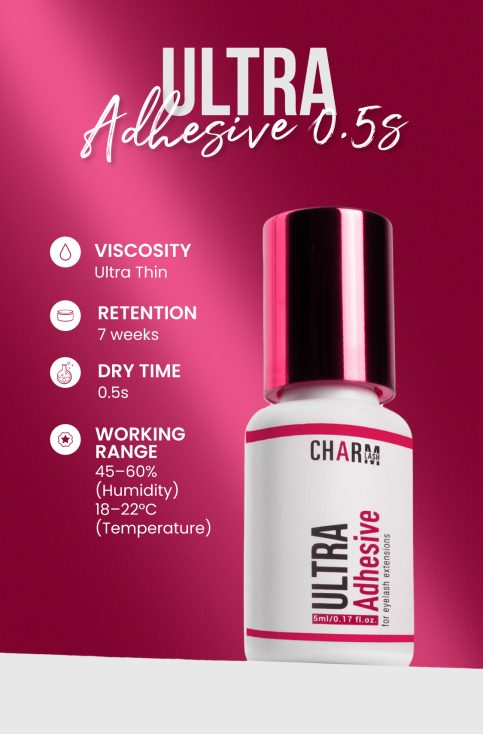
2.3. Pro Ultra Adhesive
Our Pro Ultra Adhesive is an extra-strong, ultra-fast formula that cures in 0.5 seconds and delivers up to 6 weeks of retention. Notable for its low fume output and consistency that is thin like water, it is also formulated to be both oil-resistant and water-resistant. Given its ultra-fast bonding time, lash artists will find this adhesive highly effective in salon environments experiencing drier air or low humidity.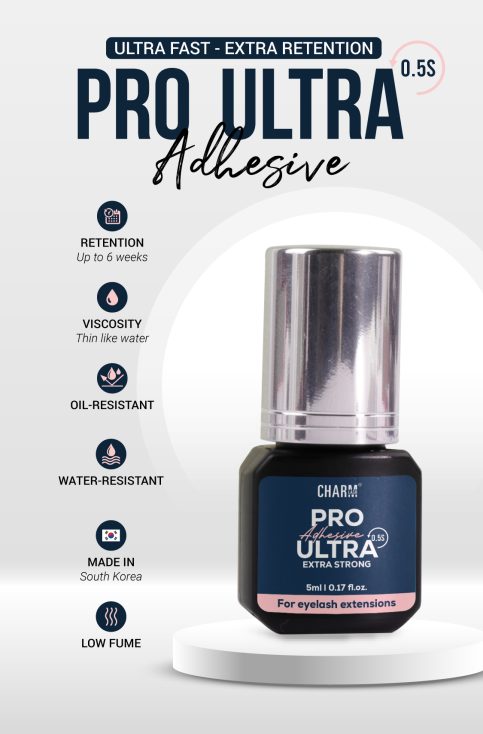
2.4. Blink Bond Adhesive
The Blink Bond Adhesive is formulated for client comfort, featuring ingredients that reduce irritation like Ethoxy Ethyl Cyanoacrylate and low fume & odor. This adhesive boasts an ultra-thin viscosity, up to 7 weeks of retention, and a set time of 0.3-0.5 seconds. Its ideal working conditions are a working temperature of 20-30°C and a working humidity of 40-70%. With such a quick set time, this product is particularly optimized for lash application in lower humidity settings.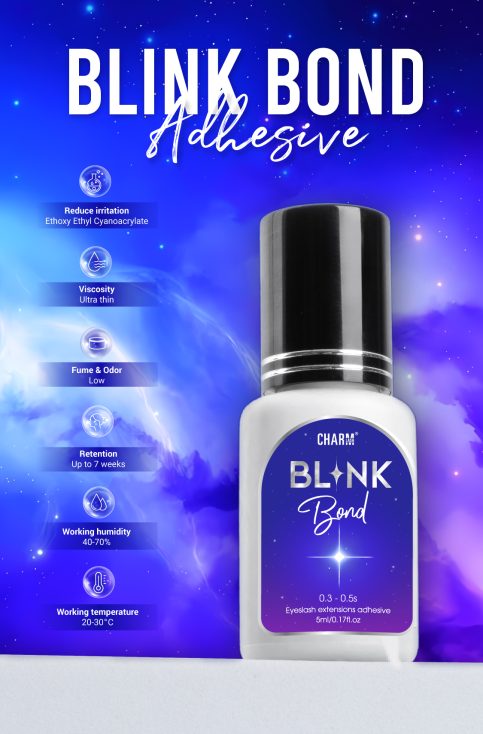
III. The impact of temperature (the regulator)
While humidity is the catalyst, temperature is the primary regulator of the chemical reaction. Temperature dictates the speed and consistency of the adhesive, impacting the efficacy of the entire lash glue temperature and humidity interaction.
A. Ideal temperature for lash glue
The optimal lash glue temperature range is typically between 68°F and 75°F (20°C and 24°C). This range ensures the adhesive is at a workable viscosity and that the chemical reaction, when paired with the ideal humidity, proceeds smoothly and predictably. This precise environmental sweet spot is crucial for consistency when considering lash glue temperature and humidity.
B. The synergy of lash glue temperature and humidity
It is crucial to remember that lash glue temperature and humidity are inseparable. They work together, and an extreme in one can negate a perfect level in the other.
- High temp + high humidity: This combination creates a scenario of extremely rapid curing, almost guaranteeing shock curing and retention failure.
- Low temp + low humidity: This results in extremely sluggish curing, leading to weak, flexible, and non-durable bonds.
Every artist must continuously monitor the actual lash glue temperature and adjust the environment accordingly. Understanding whether heat affects lash extensions is essential, as elevated temperatures can ruin the viscosity and stability of your adhesive even before application. The perfect balance of lash glue temperature and humidity is your ultimate goal.
C. The effects of extreme temperatures
1. High temperature effects
When temperatures rise above 78°F (~26°C), the high lash glue temperature causes the adhesive to thicken prematurely on your palette and accelerate deterioration of the adhesive in the bottle. You must minimize the exposure of your best lash adhesive to high humidity or any glue to direct heat.
2. Low temperature effects
When temperatures drop below 65°F (20°C), the cold-lash glue temperature causes the adhesive to thicken, slowing the reaction. Correcting this environmental issue in colder months often means ensuring the room heating is adequate, not just adding moisture. You must control the lash glue temperature and humidity together for the best results.
IV. Mastering environmental control and application
Achieving perfect retention requires active, continuous management of the lash glue temperature and humidity in your workspace.
A. Essential monitoring and control tools
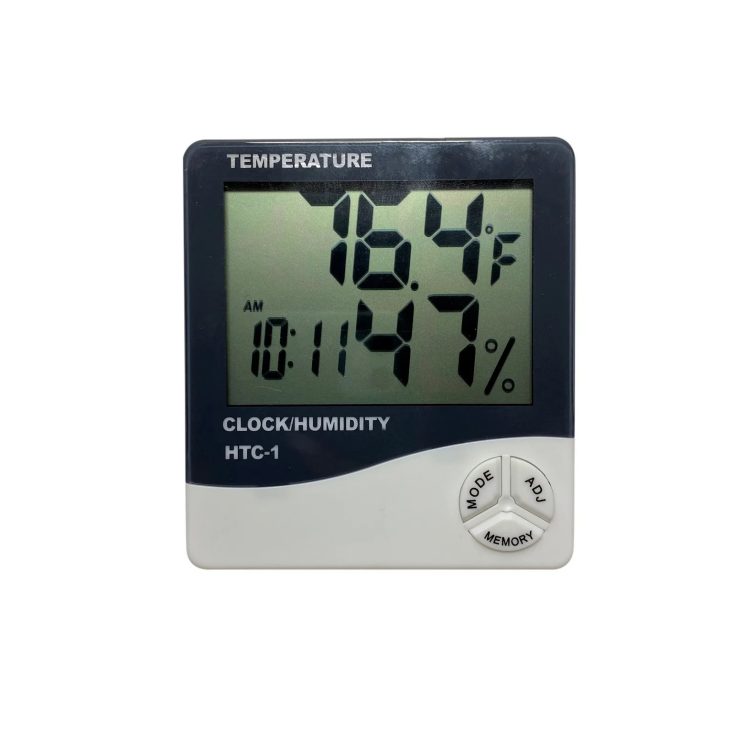
A hygrometer/thermometer combination device is non-negotiable. It accurately measures the lash glue temperature and humidity directly at your workstation. This eliminates guesswork and allows you to make informed adjustments to your environment.
B. Application strategies for optimal performance
Even with perfect environmental settings, improper handling can cause failure.
- Fresh drop rule: The adhesive on your palette degrades quickly due to exposure to the air, challenging the stability of lash glue temperature and humidity. Discard the glue drop and pour a fresh one every 15-20 minutes, regardless of the formula you are using, be it the best low-humidity lash glue or the best lash adhesive for high humidity.
- Proper storage: Opened glue must be stored upright in an airtight container with silica gel packets in a cool, dark location. Never expose the bottle to conditions that compromise the ideal lash glue temperature and humidity balance.
C. Active curing with a nano mister
In dry environments (low humidity), you can actively control the final curing process. After the full set or fill is complete, use a Nano Mister or Nebulizer. This device produces a superfine mist of water particles that triggers the full polymerization of the bond, strengthening the bond and minimizing the release of residual fumes. This controlled method is a safer and more effective way to introduce the necessary moisture than relying on struggling to achieve perfect ambient humidity, which poor lash glue temperature and humidity conditions can throw off.
V. Conclusion: achieving unbeatable retention
Lash extension artistry is fundamentally a technical craft built on chemical reactions. By truly understanding how lash glue temperature and humidity govern the performance of your cyanoacrylate adhesive, you transition from a lash artist guessing at retention to a lash scientist who controls the outcome.
To conquer retention issues and elevate your service quality:
- Measure and maintain: Use a hygrometer to keep RH between 40% and 60%, and the temperature between 68°F and 75°F (20°C and 24°C). This is the ideal range for your lash glue temperature and humidity to cooperate.
- Adapt your product: Use specialized formulas, such as a high-humidity lash adhesive for damp climates and a best lash glue for low humidity for dry ones, to adjust to the specific demands of the environment. The right adhesive is essential for stable lash glue temperature and humidity performance.
- Control your air: Employ humidifiers or dehumidifiers to stabilize the environment, ensuring a predictable curing time for every single application. The control of lash glue temperature and humidity is paramount.
By actively managing the relationship between lash glue temperature and humidity, you ensure the polymerization process is flawless, resulting in strong, durable, and long-lasting lash sets. This dedication to controlling these key environmental factors is the only way to deliver visible, unbeatable results every time.
Stay connected for more expert lash tips!
Follow us on Instagram for daily retention hacks and product spotlights related to lash glue temperature and humidity control.
And if you want to know more, check out our guides on: