

We are absolutely thrilled to dive into one of the most crucial, yet often misunderstood, topics in the world of professional lash artistry: the incredible chemical process behind our adhesive bonds! As lash professionals, we often hear the confusion – is my glue dry or is it cured? Aren’t they the same thing?
The short answer is a resounding NO! While they sound similar, understanding the essential difference between drying vs curing is the game-changer that separates good lash artists from true masters. It’s the secret sauce to delivering phenomenal retention, reducing sensitivities, and ensuring every single set you create is rock-solid. At CharmLash, we consider this distinction the foundation of proper lashing.
Mastering the science of eyelash extensions drying vs curing requires precision, but the knowledge pays off exponentially. It dictates your working environment, your product choices, and your client aftercare instructions. It’s the essential piece of knowledge for any artist looking to move beyond the basics. The clarity we gain from understanding eyelash extensions drying vs curing directly impacts our success.
We believe that empowered artists lead to delighted clients. So, let’s peel back the curtain, embrace the science, and truly master the two distinct phases of how our lash adhesive works!

A. The lash adhesive superpower: It all starts with chemistry
To appreciate the critical difference between drying vs curing, we must first pay homage to the hero ingredient in virtually every professional lash glue: Cyanoacrylate.
Cyanoacrylate is a powerhouse monomer that, when exposed to moisture (specifically hydrogen and oxygen molecules in the air and on the natural lash), undergoes a rapid chemical reaction called polymerization. In short, think of polymerization like tiny LEGO bricks locking together in an unbreakable chain. This reaction transforms the liquid adhesive into a solid, durable polymer – that’s the strong, flexible bond we rely on!
The environment plays a massive role in this entire process. Humidity (the amount of moisture in the air) and temperature are the critical catalysts. This is why artists obsessed with achieving the best lash adhesive performance monitor their lashing environment like scientists. If you’ve ever wondered why your adhesive is too slow one day and too fast the next, it’s all down to the environment speeding up or slowing down the drying process – but that’s still only half the story! The core of the drying vs curing misunderstanding lies right here: the chemical reaction happens in stages. We must understand the nuance between drying vs curing.
B. Phase 1: Drying – the lightning-fast initial set
Drying refers to the initial, instantaneous, and surface-level setting of the adhesive. It is the first, immediate step of polymerization.
What is drying?
This is the moment of truth! Drying time is the amount of time it takes for the adhesive to react with the small amount of moisture necessary to form an initial surface tack and hold the extension in place. When you read an adhesive label that says “0.5-second dry time” or “2-second dry time,” this is what it’s referring to. It’s the working window.
3 key characteristics of the drying phase:
- Speed: It is incredibly fast, lasting only seconds. The adhesive is formulated to dry quickly to allow the artist to move on immediately to the next lash without the placed extension slipping.
- Bond strength: The bond is set, meaning the extension is attached, but it is not at its maximum strength. The core of the adhesive mass is still liquid or semi-liquid and vulnerable.
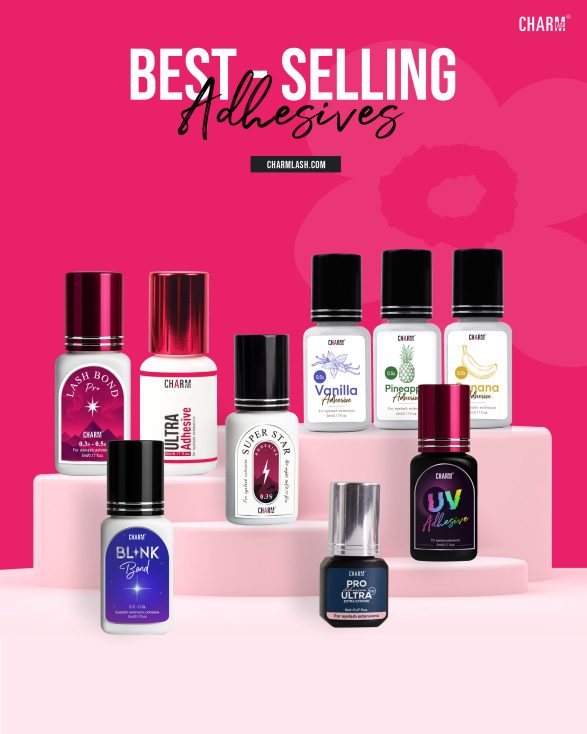
- The artist’s cue: The drying process is the artist’s immediate feedback loop. If the adhesive is drying too slowly for your pace, you need to adjust your environment or grab a faster-setting glue, such as one from our comprehensive range of high-performance CharmLash adhesives. Understanding the optimal speed of the initial dry is step one in mastering drying vs curing.
If you don’t allow sufficient drying time between lashes, you will experience what we call “stickies”, or adjacent lashes gluing together, which is a major no-no for lash health and isolation. Mastering the separation right after the initial drying set is crucial. The drying process is purely about application efficacy, but it doesn’t guarantee the long-term integrity of the set. That’s where the full cure comes in. Achieving the perfect balance between drying vs curing starts here. This rapid initial set is the key differentiator in eyelash extensions drying vs curing.
C. Phase 2: Curing – where the mighty bond is formed
Now, here is where the real durability magic happens! Curing is the continuation and completion of the polymerization process, where the adhesive achieves its full, maximum hardness and resistance. This is the ultimate goal for lasting lash retention.
1. What is curing?
Curing is the total hardening of the adhesive molecule, transforming it from a fragile, newly set material into a durable, cross-linked polymer chain. This complete polymerization is the core difference in the drying vs curing equation.
3 key characteristics of the curing phase:
- Duration: Unlike instant drying, curing takes time. Traditionally, this process required 24 to 48 hours to complete fully. During this period, the adhesive is gradually reacting with atmospheric moisture to achieve its final strength.
- Bond integrity: Once fully cured, the adhesive is waterproof, resistant to most oils, and can withstand normal wear and tear. This is when the bond is officially deemed robust.
- Client aftercare: The traditional 24-hour rule (avoiding excessive water, steam, and heat) exists purely to protect the adhesive during the slow curing phase. Introducing too much moisture or heat too soon can lead to “shock polymerization,” which cures the adhesive too quickly, making it brittle and resulting in poor retention and potential irritation. Understanding this phase is key to explaining drying vs curing to your clients.
2. The problem with traditional curing
The 24-48 hour wait is often cited as the biggest client inconvenience. When clients get their lashes wet before the adhesive is fully cured, the rapid shock of moisture can cause the outer layer to harden instantly, trapping unreacted molecules inside. This incomplete cure leads to a weaker, whiter (or “blooming”) bond that flakes off prematurely. It’s why artists must clearly differentiate the phases of drying vs curing for clients. This confusion is why we developed faster-setting adhesives; check out our rapid-cure CharmLash glues that minimize the time required for a full cure. We must conquer the complexities of the full drying vs curing cycle for optimal results.
D. Why understanding the difference is everything
The difference between drying vs curing is not just semantics; it directly impacts your technique, product choice, and client education. A true mastery of drying vs curing elevates your entire service. It empowers you to maximize lash retention.
1. Retention and troubleshooting
When you understand that your adhesive’s drying speed is based on the humidity in your room, and its curing speed is based on time, you can troubleshoot retention issues like a pro! This deep understanding of drying vs curing is your best troubleshooting tool.
- Problem: Lashes are sliding off during application (poor drying).
- Solution: Increase room humidity or switch to a faster, better lash adhesive.
- Problem: Lashes are falling off after a week (poor curing or aftercare).
- Solution: Educate the client better on the full curing process, or incorporate an accelerated curing product into your service (more on this below!). The relationship between drying vs curing is paramount for maximizing lash retention.
For more in-depth retention tips and how to select the right humidity-friendly glues, make sure to check out our detailed adhesive selection guide.
2. Preventing sensitivity and reactions
When the adhesive is only dried and not fully cured, it is still actively releasing a tiny amount of fumes (fumes are part of the polymerization process). These fumes are the primary cause of irritation and sensitivity for clients. The distinction between drying vs curing means we can mitigate client discomfort.
By accelerating the curing process, we rapidly seal the adhesive, minimizing the duration of fume release and significantly reducing the risk of irritation. This is a massive win for client comfort and safety! This technical paper on the role of cyanoacrylate polymerization in medical applications provides great context on how humidity affects the speed and integrity of the bond, which is highly relevant to our discussion of drying vs curing.
E. Accelerating the cure: Modern solutions
The good news is that professional tools and products have dramatically changed the game, effectively bridging the time gap between drying vs curing. We no longer have to rely solely on the slow, traditional 24-48-hour atmospheric cure! The innovation in lash application means the clear distinction between drying vs curing is more actionable than ever. It’s about controlling the second phase of drying vs curing.
1. The power of the nano mister and nebulizer
The good news is that professional tools and products have dramatically changed the game, effectively bridging the time gap between drying vs curing. We no longer have to rely solely on the slow, traditional 24-48-hour atmospheric cure! The innovation in lash application means the clear distinction between drying vs curing is more actionable than ever. It’s about controlling the second phase of drying vs curing.
These tools do not speed up the initial drying time (the seconds it takes to place the lash), but they dramatically accelerate the curing process.
- How it works: By emitting a superfine mist of water molecules, they provide the adhesive with the exact, controlled burst of moisture it needs to complete polymerization instantly and efficiently.
- The Result: A bond that is fully cured before the client even leaves your chair! This eliminates the traditional 24-hour waiting period, making aftercare much easier and boosting client satisfaction. This technology is a game-changer in the professional application of drying vs curing principles. To ensure you’re using the right tools, check out our selection of essential accessories for your workspace.
2. Our exclusive, game-changing drying liquid product lines
The drying process of lash adhesives is a must. But sometimes the wait is not worth it – that’s the reason why our team developed specific products to speed up this process.
- Glue Accelerator: Our product is exclusively designed for pre-treatment and can be applied to the natural lashes or the extension strips BEFORE application. It ensures the lash surface has the optimal pH level and the slight trace of moisture needed to perfectly initiate the polymerization reaction, optimizing the drying speed for maximum efficiency.

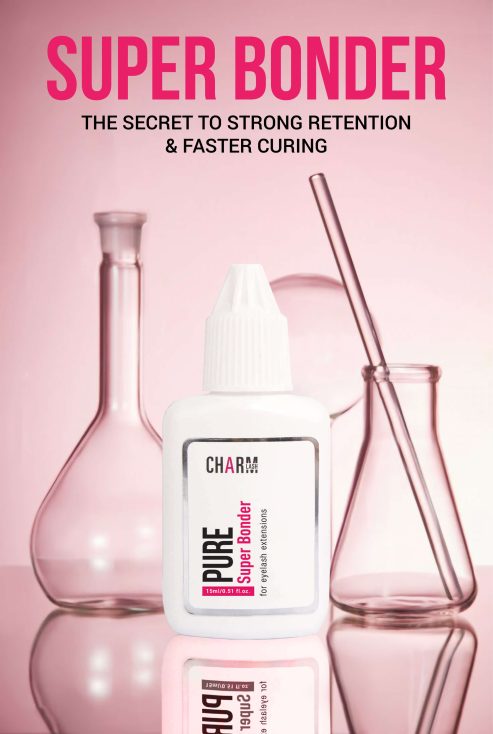
- Lash Super Bonder: This is applied AFTER the set is complete. Our Super Bonder works by instantly hardening the outer layer of the adhesive and sealing the flexible bond, eliminating residual fumes. This one step ensures that the bond reaches its maximum potential strength, dramatically improving lash retention and sealing in the fumes faster than air alone. It is the ultimate tool for controlling the often unpredictable curing phase.
3. The big game changer: Our advanced curing liquid
The fastest path to conquering the entire eyelash extensions drying vs curing cycle involves an advanced liquid product line, which is our Lash Primer – the essential first step. Our Primer is formulated to cleanse the natural lashes thoroughly and restore the optimal pH level, prepping the surface to react perfectly with the adhesive.

Want to see how it works? Follow us on Instagram for video demonstrations on using different types of liquid for instant results! We are continuously showing artists the difference between drying vs curing and how these liquids revolutionize the process.
The final takeaway: Why you must master drying vs curing
In summary, the difference between drying vs curing is clear and powerful. We have made a comparison chart to sum up the differences.
| Feature | Phase 1: Drying (Initial Set) | Phase 2: Curing (Full Strength) |
|---|---|---|
| What It Is | The initial, instantaneous, and surface-level setting of the adhesive. The first step of polymerization. | The continuation and completion of the polymerization process, where the bond achieves its full, maximum hardness and resistance. |
| Duration | Seconds. Incredibly fast (e.g., 0.5 to 2 seconds). | Hours. Traditionally takes 24 to 48 hours to complete fully. |
| Bond Strength | The extension is attached (initial tack), but the bond is not at its maximum strength and is still vulnerable. | The full, maximum-strength, waterproof, and oil-resistant bond is formed. The set is officially deemed robust. |
| Key Control Factor | The glue’s formula and the ambient humidity and temperature of the lashing environment. | Time (gradual reaction with atmospheric moisture). It can be accelerated with professional tools (Nano Mister, Super Bonder). |
| Application Impact | Dictates the artist’s working speed and prevents “stickies.” | Ensures long-term lash retention and is critical for client aftercare instructions. |
| Fumes/Irritation | Still actively releasing a small amount of fumes. | Fumes are sealed in, minimizing the duration of release and reducing the risk of irritation. |
When you master the chemistry of drying vs curing, you master the craft. Now go out there and create the most long-lasting, beautiful sets possible! We are here to support your journey every step of the way. If you are looking to upgrade your adhesive selection and ensure perfect retention every time, be sure to explore our line of professional-grade and fast-drying lash adhesives, or you can visit our LinkedIn.
And if you want to know more, check out our guides on: