


For those seeking to enhance their natural beauty with voluminous and long lashes, the options can be overwhelming. The main debate that often surfaces is “cluster lashes vs volume lashes”. While they both promise dramatic fullness, they represent fundamentally different approaches to lash enhancement- one that is temporary and potentially damaging, and one that is professional, safe, and long-lasting.
This definitive guide will dissect the history, application, risks, and benefits of both techniques. Our goal is clear: to equip you with the knowledge to understand why professional volume lashes, or so-called classic (individual) extensions, are the gold standard, and why you should avoid using cluster lashes for long-term lash health.

A. Defining the contenders: Cluster lashes vs volume lashes
Before diving into the technical differences, it’s crucial to understand the purpose and structure of each product.
1. Cluster lashes: The temporary solution that became a problem
Cluster lashes (also known as lash flares, cluster flares, or simply clusters) are artificial eyelashes consisting of a small bundle of fibers: typically between 4 and 11 individual strands that are pre-glued together at one end. This binding creates a thick, heavy, blunt base or “bulb”.
- Origin and purpose: Clusters were created as a quick, cost-effective way for makeup artists or consumers to add density for photography or a single evening event. They were designed to be applied using a water-soluble or latex-based adhesive (like strip lash glue) and removed within 24 hours. They are not, and were never intended to be, a semi-permanent lash extension solution.
- Structure: The wide, often knotty base is what defines a cluster. This structure is fundamentally incompatible with the precision required for professional lash extensions, as it prevents the clean, isolated attachment needed to protect the natural lash cycle.
- The misuse: While clusters offer immediate, dramatic density, this effect is temporary and compromises the natural growth and health of the underlying natural lashes.
2. Volume lashes: The evolution of lash artistry
Volume lashes (including Russian volume) represent a monumental leap forward in lash artistry. This technique was developed to allow lash artists to safely create significant fullness, even on clients with sparse natural lashes. This focus on maximizing volume while minimizing weight is key to understanding modern techniques.
- The classification: Volume techniques are categorized by density:
- Light volume: 2D-3D
- Full volume: 3D-9D
- Mega volume: 10D and above

- The technique: The technician uses ultra-fine, lightweight fibers, typically from 0.05 to 0.07mm (with 0.02mm and 0.03mm reserved for the Mega volume technique), to manually create a fan of extensions. These fine fibers are light enough that even a fan of 6 can weigh less than a single, thick classic lash.
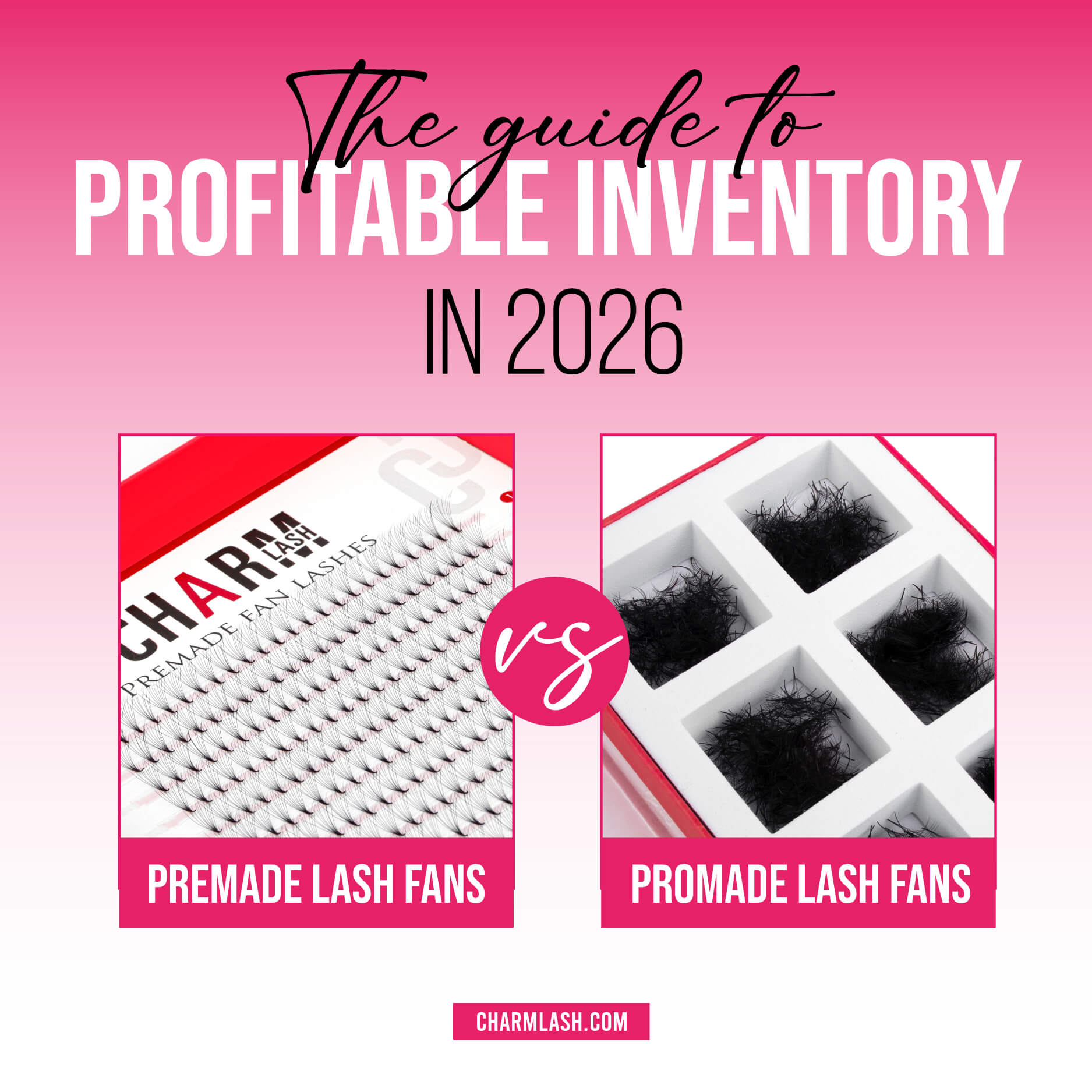
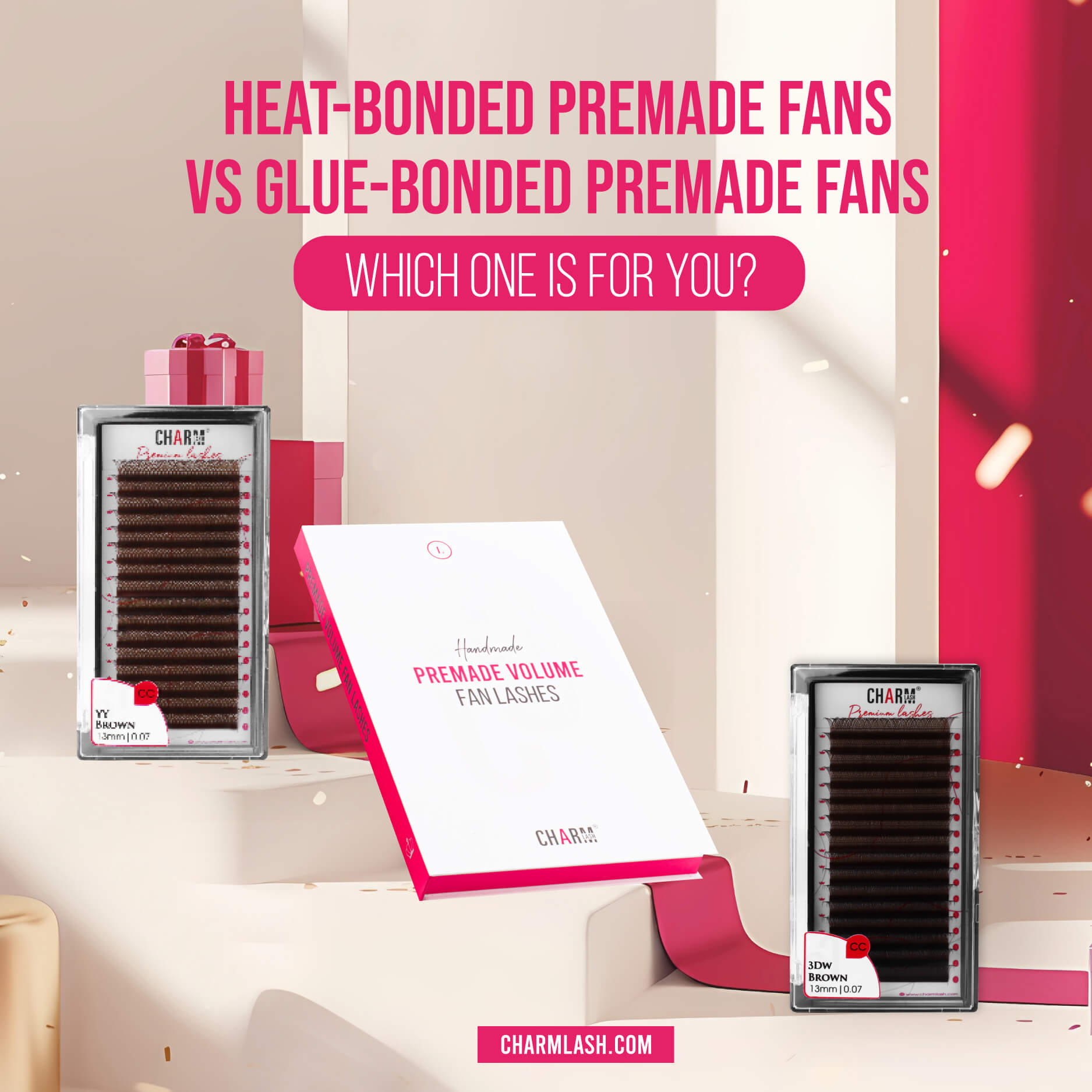
- The alternative: Many high-quality lash artists now use premade lash fans for efficiency, which differ significantly from clusters. The quality of these premade fans (often referred to as Promade or Premade) depends entirely on the supplier and manufacturing process. We often guide professionals on choosing promade or premade fans to ensure they maintain high safety standards.
- Structure: The Volume fan is carefully fanned out with minimal glue at the base, forming a sleek, narrow point designed to wrap around and adhere seamlessly to a single natural lash.
- Application method: A certified professional isolates one single, healthy natural lash and attaches the entire handmade fan to that lash. This meticulous isolation is the cornerstone of lash health.
B. The science of damage: Why cluster lashes may cause permanent hair loss
This is the most critical difference. The disparity between the two techniques is rooted in the natural biology of your hair.
1. Understanding the anagen, catagen, and telogen phases
Every one of your natural lashes is in one of three growth stages:
- Anagen (Growth phase): The lash is actively growing.
- Catagen (Transition phase): The lash stops growing and the follicle shrinks.
- Telogen (Resting/Shedding phase): The lash is fully mature and rests before naturally shedding to make way for a new Anagen lash.
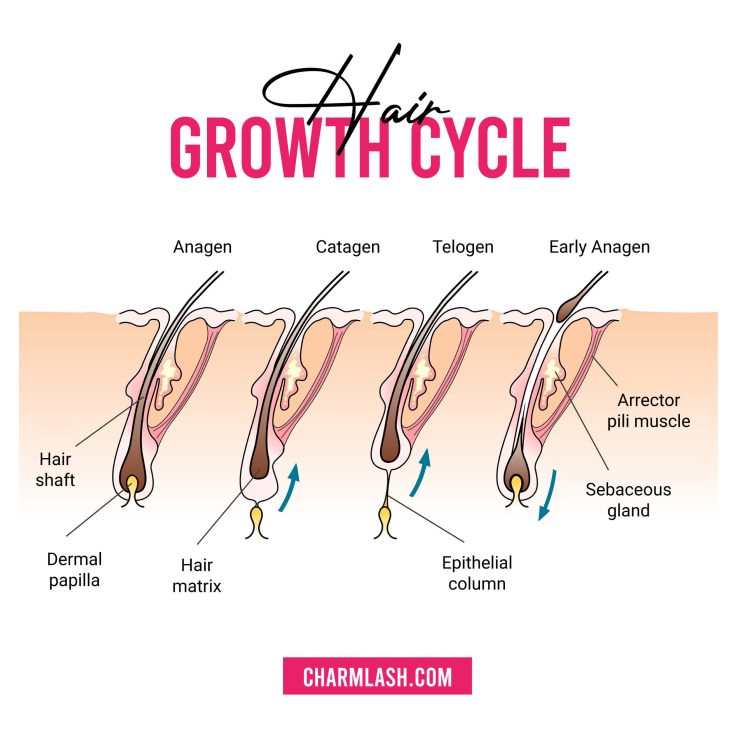
A healthy lash extension technique must respect these cycles. When a Volume fan is applied to a single lash, that fan sheds harmlessly when the natural lash enters its Telogen phase. For more advanced options, techniques like light volume lash extensions offer a perfect balance of fullness and minimal weight, ensuring optimal health during the natural shedding cycle.
2. The deadly “splinting” effect of cluster lashes
The heavy base of a cluster, when applied with strong adhesive, “splints” together multiple natural lashes that are all in different growth cycles. Imagine gluing together a teenager, an adult, and an elderly person.
- Forced shedding: When the mature lash (in Telogen phase) is ready to shed, it cannot because it is physically bound to the actively growing lashes (in Anagen phase).
- Traction alopecia: The massive weight and force from the trapped lashes create undue stress on the follicle of the growing lashes. Over time, this constant, heavy pulling (or “traction”) can traumatize the hair follicle so severely that it ceases to produce hair altogether. This condition is called Traction Alopecia, and the resulting lash loss can be permanent.
- Follicle suffocation: The immense amount of glue required to secure a cluster can also cover and clog the delicate hair follicle openings, leading to folliculitis, dermatitis, and poor lash health.
C. Comparing the application and material components
1. Material and weight
| Component | Cluster Lashes | Volume Lashes |
| Fiber Diameter | Thick and heavy (often at 0.15mm to 0.20mm). | Ultra-fine (ranging from 0.02mm to 0.07mm). |
| Weight Distribution | Concentrated weight at the single, heavy base. | Evenly distributed, feather-light weight across the entire natural lash line. |
| Material Quality | Lower quality synthetic fibers. | High-quality synthetic PBT fiber (usually named as Mink or Silk) sourced from reliable wholesale lash supplies. |
The core advantage of volume is its focus on distributing minimal weight across the lash line, ensuring comfort and safety.
2. Adhesive use and hygiene
The type and quantity of adhesive used are critical health indicators.
- Cluster Glue: If clusters are applied with strip lash glue (water-soluble), they are temporary and prone to lash extensions falling out in dramatic, unnatural clumps. If they are applied with lash extension glue (cyanoacrylate), the thick base forces the technician to use an excessive, unsafe amount of adhesive, leading to hardened glue chunks, improper curing, and increased risk of allergic reactions and infections due to trapped moisture and bacteria.
- Volume Glue: Professional volume application uses a precisely controlled, microscopic amount of flexible, rapid-curing adhesive, ensuring a clean, 1-2mm isolation gap from the eyelid skin. This preserves skin and follicle health, allowing the natural lash to breathe and the lash line to remain hygienic.
D. Understanding the future: Why volume is here to stay
The lash industry is constantly innovating, and safety and specialization are becoming the new lash trend in 2025. This movement toward professionalism further isolates the outdated and dangerous practice of applying cluster lashes.
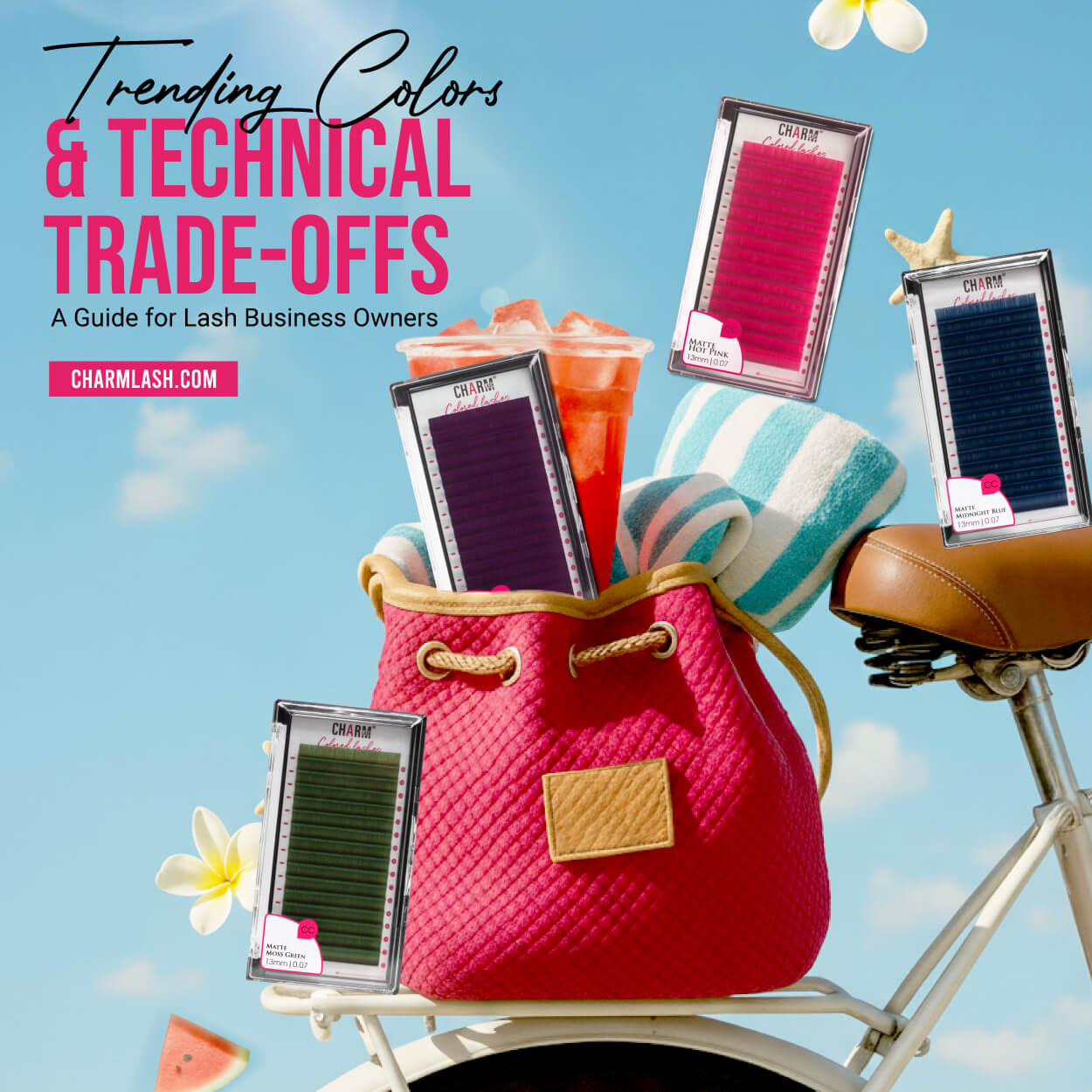
This innovation extends beyond standard black lashes. Technicians are now using advanced Volume techniques to incorporate vibrant options, proving that colored eyelashes are back and can be applied safely using the volume method without compromising natural lash health.
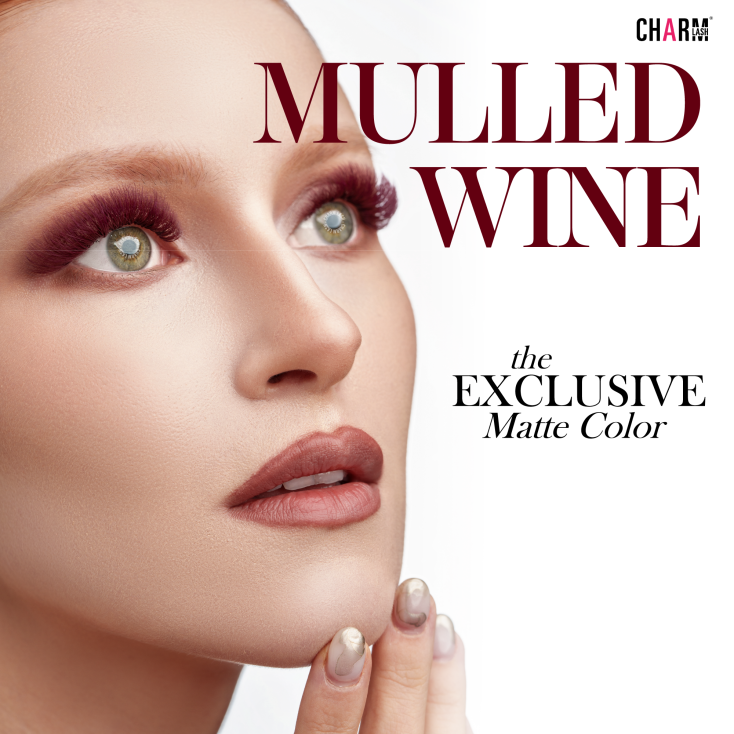
Furthermore, the industry is becoming adept at differentiating between premade options. For professionals, knowing the huge differences between cluster lashes vs volume lashes, and how to choose between promade and premade fans is essential, highlighting the specialized knowledge required for quality volume work – a far cry from the amateur nature of cluster application.
E. The investment factor: Cost vs. value
While a cluster lash application might seem cheaper upfront, the true cost is measured in the health of your eyes and the required corrective maintenance.
1. Cluster lashes application
- Initial cost: Cluster lashes application may cost up to $80 and takes around half an hour.
- True cost: If damage occurs, the client faces corrective removal (often painful and difficult), potential visits to an eye doctor for infection or dermatitis, and months of using lash growth serums (can cost up to $150) to repair the damage, assuming the loss is not permanent.
2. Volume lashes application
- Volume lashes: Initial sets range from $120 to $300 and take 2 to 3 hours.
- Value: This cost represents the technician’s extensive training, the high-quality, safe materials, and the peace of mind knowing the health of your natural lashes is protected. The longer weeks of wear provide infinitely better value than 1-3 days of clusters.
F. Expert advice and conclusion
As lash artistry continues to evolve, the consensus among certified professionals is clear: avoid cluster lashes. They represent an outdated, dangerous, and often unhygienic shortcut that can have lasting consequences.
If your primary focus is safety, longevity, and a stunning, customizable result, always choose a certified technician who uses a true isolation technique (volume or classic). Never let a lash artist apply a premade cluster that bonds to more than one of your natural lashes. The health of your eyes is worth the investment in quality and professional skill.
To discover more expert tips, professional volume lash techniques, and stay up-to-date on the latest lash designs, connect with us today on our social media platforms: Instagram and Pinterest!